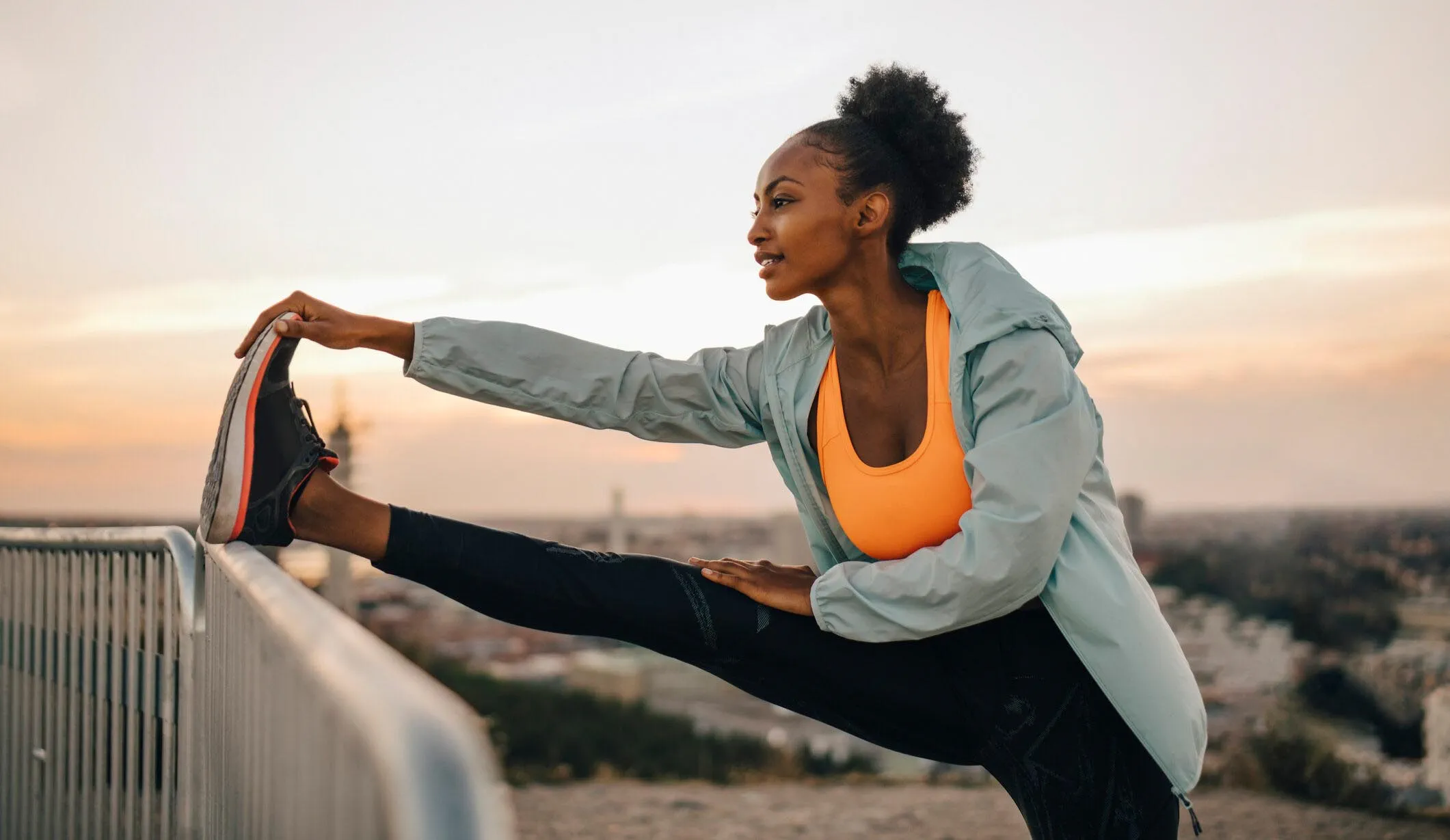
No matter your activity level and approach to fitness, everyone can benefit from a good stretch. Explore the benefits of stretching and some guidelines on when and how to do it.
When and how should you stretch?
Stretching can be done at any time, but should be done differently based on the time you select.
Static stretches
Holding a stretch position for a period of time should always be done when the muscles are warm. “When muscles are warm, they are more receptive to elongating,” shares Ann Heckler, a yoga instructor with ProMedica ForeverFit. This means that the best time to do static stretches is after a workout, or after spending at least 10 minutes getting your heart beating faster than its resting rate.
To gain flexibility, you must do static stretches and hold each position for at least 30 seconds each. Stretches held for less time than this are still good, but they will just help you reduce tightness, not help you gain any flexibility.
Dynamic stretches
Moving your limbs through a full range of motion can be done when the muscles are cold, before a workout. “Gentle full range of motion movements are great to help you feel a little stretched out before getting into the workout. Just save the deep stretches for after the workout,” Heckler shares.
Fascia release
This type of deep tissue massage can also be done when muscles are cold. Fascia release involves massaging your deep tissue (fascia) using a small silicone ball. Fascia is receptive to being stretched when cold, so this type of stretching can be done pre or post-workout.
How far should you stretch?
You should stretch right to the edge of where you feel the stretch but don’t feel any discomfort. “Stretching isn’t supposed to be painful – if you are in pain, let off the stretch a little,” Heckler shares. “You should also always be able to breathe deeply and comfortably. If your breath is unsteady or strained, come out of the stretch.”
What are the benefits of stretching?
If you follow a stretching routine that is comprehensive and consistent, you can help minimize everyday aches and pains, and injuries.
Back and hip tightness and pain are a common result of not stretching. By stretching out the glutes and hips, you may reduce your pain and your risk for resulting issues, such as gait imbalance.
“Stretching causes the muscles to become elongated, which just makes you feel better overall,” shares Heckler. “It allows you to be able to sit a little taller, which helps you breathe better.”
Subscribe to Our ProMedica Newsletter
Looking for inspiration on how to improve your health and well-being? Get trustworthy health news, wellness tips and inspirational patient stories delivered to your inbox twice a month with our free ProMedica newsletter.