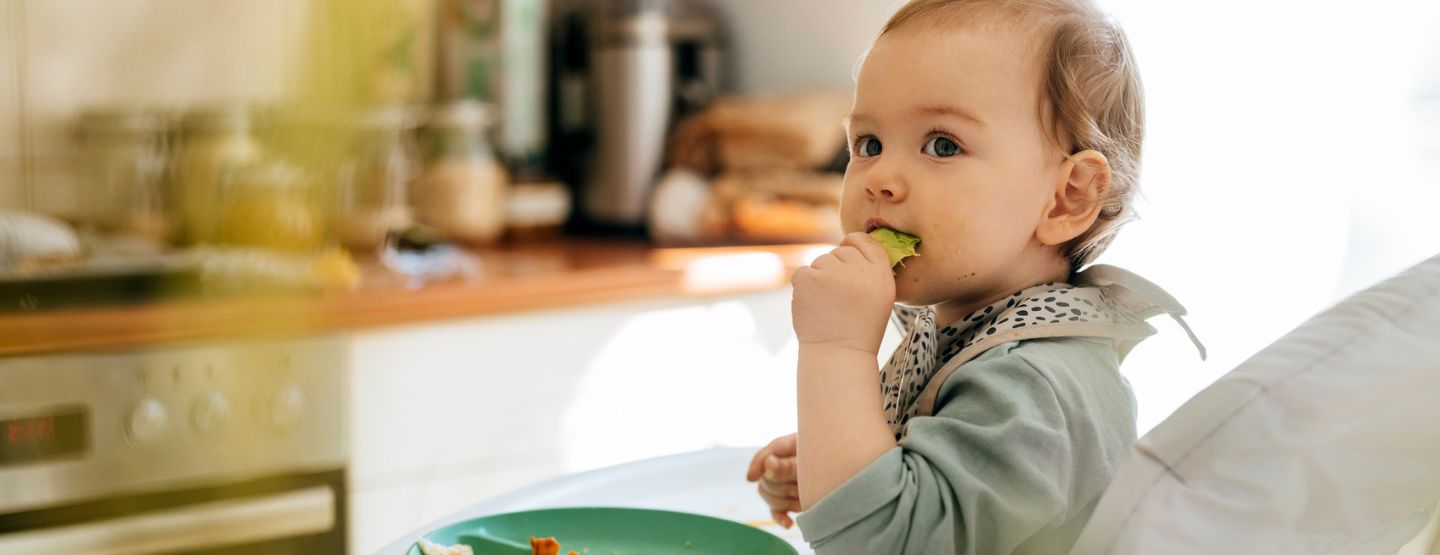
When it’s time to introduce food, many parents start by giving their baby traditional first foods, such as pureed fruits and vegetables and infant cereals served on a spoon. But this isn’t the only option. Another method, called baby-led weaning, skips the purees and starts with solid foods. These foods are soft pieces cut into sticks or small pieces that the baby can pick up and eat on their own.
One type of feeding isn’t necessarily better than the other. In both types of feeding, there is no real “weaning” of breastmilk or formula yet, but rather the addition of other foods. Up until about one year of age, breastmilk and/or formula should still be the main source of nutrition. However, if you try baby-led weaning, there are some things you should know to make sure it’s safe for your baby.
Signs of Readiness for Introducing Food
“Making sure that your baby is showing signs of readiness is the most important aspect of introducing solid foods,” shares Megan Schlachter-Walter, a lactation consultant at ProMedica Toledo Hospital.
Around six months of age, babies are typically ready to start complementary foods. Babies should also show the following signs of readiness:
- Good head and neck control.
- Ability to sit up in a high chair.
- Show an interest in food and eating.
- Bringing hands and toys to their mouth.
- Ability to move food from their hands/spoon into their mouth and down their throat.
Also, always talk to your child’s pediatrician before starting solid foods.
“If you decide to try solid foods and don’t have success, it is OK. Your baby just might not have the strength and coordination needed yet. And that is completely normal. Just give it a rest and try again in a few weeks,” Schlachter-Walter encourages.
What foods should you start with?
You must continue feeding your baby breastmilk or formula during this transition. Babies should be given breast milk or formula before meals through at least one year of age. Some recommendations even encourage supplementing your baby’s diet with breast milk through two years of age.
“When you’re ready to start baby-led weaning, start with finger foods cut in strips that your baby can easily pick up,” recommends Chloe Plummer, MS, RD, LD, a clinical dietitian at ProMedica.
Easy First Foods To Introduce To Baby
The first foods you introduce should be soft and nutritious, such as:
- Ripe banana.
- Avocado slices.
- Soft steamed or baked carrot and sweet potato sticks.
“Iron and zinc are two important nutrients that babies need around six months, especially breastfed babies,” Plummer shares. “Fruits and vegetables are low in these two nutrients, so be sure to include other sources, such as pureed or shredded meats, sliced hard-boiled eggs and fortified infant cereals.”
After you’ve made the introduction to solid foods with some easy first foods, baby-led weaning encourages you to feed your child what the rest of the family is eating, cut into appropriate sizes and shapes based on the baby’s age and development.
“With baby-led weaning, no foods are off limits, except those that are unsafe for baby,” Schlachter-Walter shares.
Foods To Avoid When Beginning Baby-Led Weaning
Some foods can be unsafe or unhealthy for your baby, including:
- Honey. Children under one year of age should never ingest honey because of the risk of a type of food poisoning called botulism.
- Hard, crunchy, round or sticky foods. These types of foods are a choking hazard to small children, especially when they are just learning to eat solid foods.
- Large amounts of sugar and processed foods. You should avoid giving your baby sugar and processed foods as much as possible. These types of foods provide minimal nutritional value compared to whole foods.
What about beverages?
Because you will still be giving your baby breast milk or formula during this time, no other beverages are necessary.
Avoid giving your baby juice and cow's milk until at least one year of age. Even when your baby does reach one year old, whole fruits and vegetables are still a better option than fruit or vegetable juice because of the added sugars and preservatives in juice.
You may also begin introducing small amounts of water at mealtimes beginning at six months of age; however, it is not necessary.
Benefits of Baby-Led Weaning
Baby-led weaning has several benefits compared to traditional weaning.
It can save time and money.
Because babies are encouraged to be fed what the family is eating, it can save you valuable time and money. You won’t have to purchase and prepare separate foods for your baby.
It can be a family affair.
By giving the baby the same foods as the family, you’re able to make them a part of family mealtime from the beginning. Eating meals together can provide a time to connect, learn and model healthy eating habits.
When planning meals, focus on what the whole family should be eating rather than just the baby.
“Rather than giving a brownie dessert to everyone at the table except the baby, use this time as an opportunity to evaluate the whole family’s eating habits,” Schlachter-Walter shares. “Maybe instead of brownies for dessert, you can try something with less sugar like yogurt and berries.”
It can help your baby develop oral muscle strength and fine motor skills.
Earlier, frequent exposure to non-pureed foods can promote oral strength, hand-eye coordination and fine motor skills. Your baby may learn how to chew and move food from the hands down their throat sooner, and with more control, than if you start with pureed foods.
It can lead to long-term intuitive eating and less picky eating.
Schlachter-Walter encourages parents to offer foods to their baby even if they don’t think they will eat them. “Continue offering balanced meals with a variety of foods. Eventually, they will try them all. Offer the ‘yucky’ foods like pickles or sauerkraut. Offering a variety of foods while the baby is young usually leads to a more diverse diet as they get older.”
Don’t get stressed if they don’t eat or try all their food. Focus on what you can control (what you put on your baby’s plate) rather than what you can’t control (what they actually eat).
“You don’t necessarily have to choose only purees or only baby-led weaning. You can also do a combination of both types of feeding,” Plummer shares. “Find what works best for your family and make sure to keep the feeding experience positive for everyone.”
Safety Concerns and Measures
No matter what feeding method you choose, there can be safety concerns with choking. Always sit with your baby and be attentive when they are eating. Know the difference between gagging and choking, and what to do if your baby is choking.
Food allergies are also something to watch out for. Introduce common allergens, such as dairy, eggs, wheat, soy, nuts and shellfish in small amounts and one at a time. Introduce them early in the day so you can watch for any possible signs of a reaction throughout the day.
If your baby struggles with the transition to solid foods, talk to their pediatrician. They can provide additional recommendations to help make the transition go smoother.
Typically, struggles with the transition to solid food are solved on their own with time, but your pediatrician can also connect you with a specialist, such as a speech-language pathologist (SLP), occupational therapist (OT) or allergist if necessary.
Chloe Plummer, MS, RD, LD
Chloe is a registered dietitian at ProMedica.
Megan Schlachter-Walter
Megan is a lactation consultant at ProMedica Toledo Hospital.
Subscribe to Our ProMedica Newsletter
Looking for inspiration on how to improve your health and well-being? Get trustworthy health news, wellness tips and inspirational patient stories delivered to your inbox twice a month with our free ProMedica newsletter.