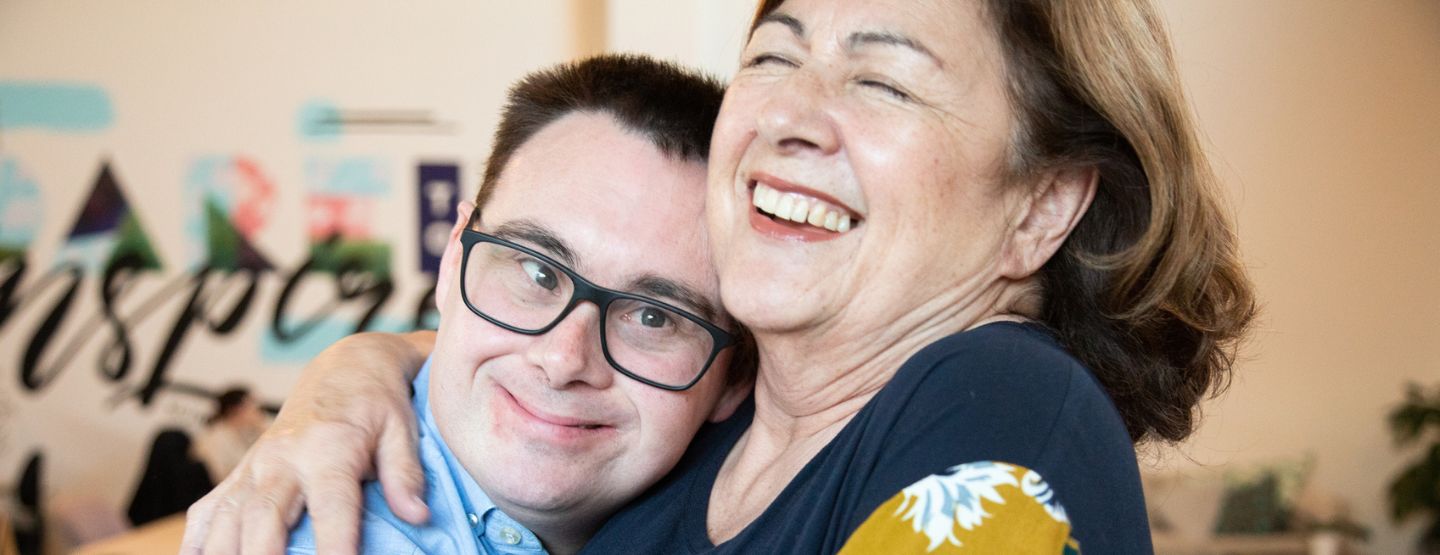
At Kaitlyn's Cottage, we work with local businesses and organizations to help make their resources more disability friendly. It can be as simple as a movie theater playing the movie with the volume down and the lights up a little. Or a local restaurant offering noise-canceling headsets for their patrons. We work to answer questions, educate, advocate when needed, and model inclusivity, because people with disabilities should be able to take up space in the communities in which they live – just like everyone else!
Often, not knowing how to interact with someone with a disability is what creates a lack of inclusion or acceptance. Here are seven ways to be inclusive when interacting with someone with a disability.
- Get to know the person. Know this person by their name, aspirations, likes and dislikes – not by their disability.
- Assume competency. Having a disability doesn't mean someone can't understand a conversation happening around them or the vibe of the room around them.
- Give independence. Something may need to be communicated differently or accomplished with some adaptations but assume they can do it. Often, someone just needs time rather than help. Ask if they need help before assuming they do.
- Speak to the individual. Do not speak around them or to someone else. If their accompanying person needs to answer for them, they will. If needed, ask for the person to repeat what they said. Ask again, if needed. You could say, "I'm sorry. I am still not understanding. Can you show me instead?"
- Respect communicative devices. Augmented and Alternative Communication Devices (AAC) are the person's voice. Make sure they always have access to their device if they use one. Taking away their device is taking away their voice.
- Respect mobility devices. Mobility devices are an extension of their body and should be treated with the same respect you'd treat anyone's body parts. Do not lean on wheelchairs without permission. Ask before moving someone that uses a wheelchair or their mobility device.
- Understand that behavior is communication. If you are getting undesirable behaviors, they are probably communicating that they are experiencing something undesirable. You may need to adjust your approach and pay attention to what is causing the behavior to decrease it.
A person with a disability is a person first and foremost. Practicing inclusive behaviors can make a difference in how much a person feels valued, seen and heard. Recognizing and celebrating diversity, acceptance and inclusion can make an impact on our behaviors.
Subscribe to Our ProMedica Newsletter
Looking for inspiration on how to improve your health and well-being? Get trustworthy health news, wellness tips and inspirational patient stories delivered to your inbox twice a month with our free ProMedica newsletter.