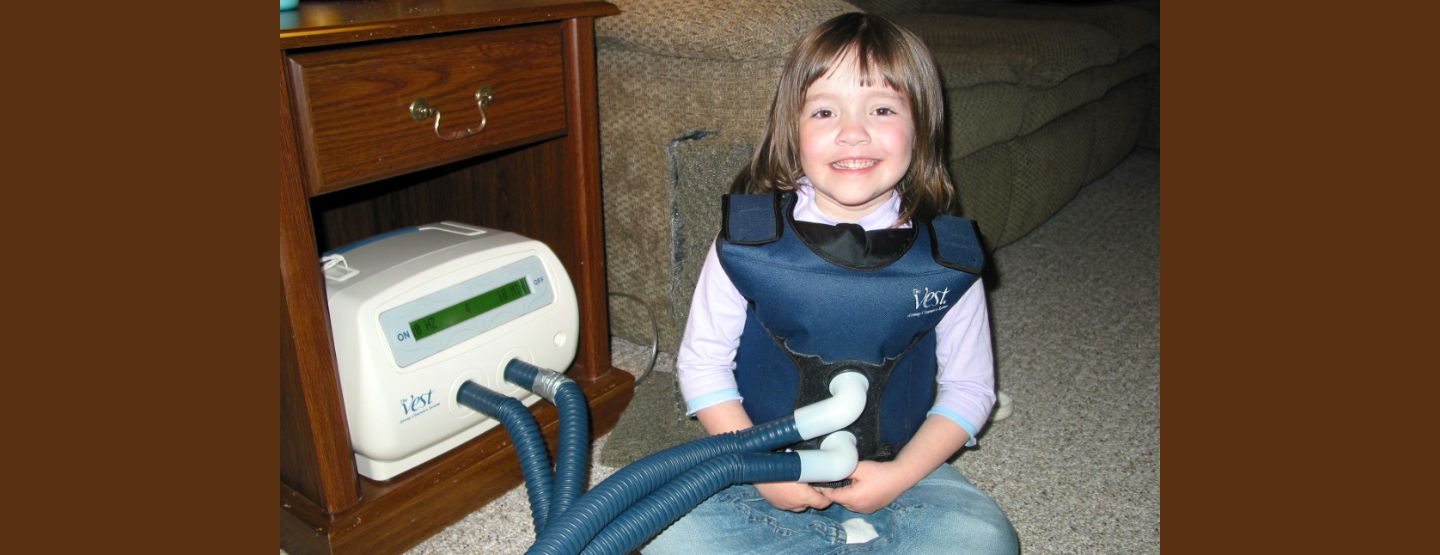
Abby Havice has a distinct memory of her parents receiving her life-changing diagnosis when she was just five years old. She had the bone growth of a three-and-a-half-year-old child and her parents finally knew why: she had cystic fibrosis.
“I wasn’t absorbing any of my food or nutrients,” explains Abby. “After a few months, my parents were able to understand my diagnosis. Everything made sense to them, and they were able to explain it to me.”
Since then, Abby has been a patient at the Cystic Fibrosis Center of Northwest Ohio, located at ProMedica Toledo Hospital.
One of the most memorable moments she’s had with the care team was when she was hospitalized soon after being diagnosed. She hated looking at her peripherally inserted central catheter, or PICC line, which was inserted into the vein of her arm.
“The social worker, Kim Reno, who doesn’t work at the clinic anymore, cut up one of her own socks to put over my PICC line spot because I didn’t like looking at it,” Abby recalls. “That just exemplifies what they – the whole team – does. They care.”
Inspired To Have a Career in Medicine
Now, Abby is a medical technologist with ProMedica Laboratories. Her work helps doctors and clinicians make informed decisions about a patient’s health for diagnoses. In fact, about 70% of medical decisions depend on laboratory test results, according to the Centers for Disease Control and Prevention.
“We run diagnostic testing on patient samples, as well as blood banking. I mainly work in chemistry and hematology, doing complete blood cell counts, analyzing samples and seeing what the cells look like,” she explains. “We don’t make the diagnosis, but we can tell pretty quickly if someone is sick and will require further testing.”
Abby had originally wanted to become a doctor, but the logistics would have been problematic with her having cystic fibrosis.
“I knew at a young age that it wouldn’t be a good idea, because if I got sick, my patients would be exposed, and if they were sick, I would be exposed,” Abby explains.
Protection against germs is important with cystic fibrosis patients, as the condition thickens mucus in the body, which can build up in the organs. In fact, two people with cystic fibrosis shouldn’t be close to each other because of the risk.
“We had the six-foot rule before it was cool,” says Abby, referring to COVID-19 precautions.
While a student at Bowling Green State University, Abby fell in love with her field during an event with the medical laboratory science organization.
“I’m coming up on two years of being with ProMedica. I like that I can help patients without being in direct contact,” explains Abby. “I feel fulfilled in this line of work.”
Raising Awareness for Life-Saving Care
Cystic fibrosis is a condition that affects the whole body, and can be especially dangerous for the lungs and pancreas. Abby takes a prescription genetic modulator medicine to help her cells create the protein her body is lacking. This helps her sodium chloride channels work effectively to stay on the surface of her cell membranes.
“Without that drug, I would not be living in my own apartment working for ProMedica, I would be on a transplant list or would have already had a lung transplant,” explains Abby.
This life-saving medicine is expensive, but thankfully, with funding, Abby has been able to access it. Events like the Toledo Great Strides walk, hosted by the Cystic Fibrosis Foundation, help raise funds for research and medicine.
“It’s a great way for the community to come together and gather donations, help research and fund medicines like the one that has greatly improved my quality of life,” says Abby.
Comprehensive Care for Cystic Fibrosis Patients
Before Abby was diagnosed with cystic fibrosis, her parents went from doctor to doctor trying to find out what was wrong. Finally, a gastroenterologist said he wanted to rule out cystic fibrosis. Now, newborns are being screened for cystic fibrosis, which started the year after Abby was born.
Providing comprehensive care for patients as soon as possible is vital because of how the condition affects the body. With the Cystic Fibrosis Center of Northwest Ohio, Abby has access to a multidisciplinary care team that includes pediatric and adult physicians, nurse coordinators, social workers, dietitians, respiratory therapists and research coordinators.
The center is also accredited by the National Cystic Fibrosis Foundation and has a robust clinical research program. This gives patients like Abby comprehensive, life-saving care, even during the hardest times.
“They went above and beyond for me every single time, my entire childhood,” says Abby. “And in the middle of COVID, which was terrifying, the center was so amazing to work with during that especially difficult period of my life.”
Subscribe to Our ProMedica Newsletter
Looking for inspiration on how to improve your health and well-being? Get trustworthy health news, wellness tips and inspirational patient stories delivered to your inbox twice a month with our free ProMedica newsletter.