Artificial intelligence (AI) and robotic technology are reshaping modern medicine, including in the operating room. These innovations are helping surgeons perform complex procedures with greater precision and improving recovery for patients.
What is robotic-assisted surgery?
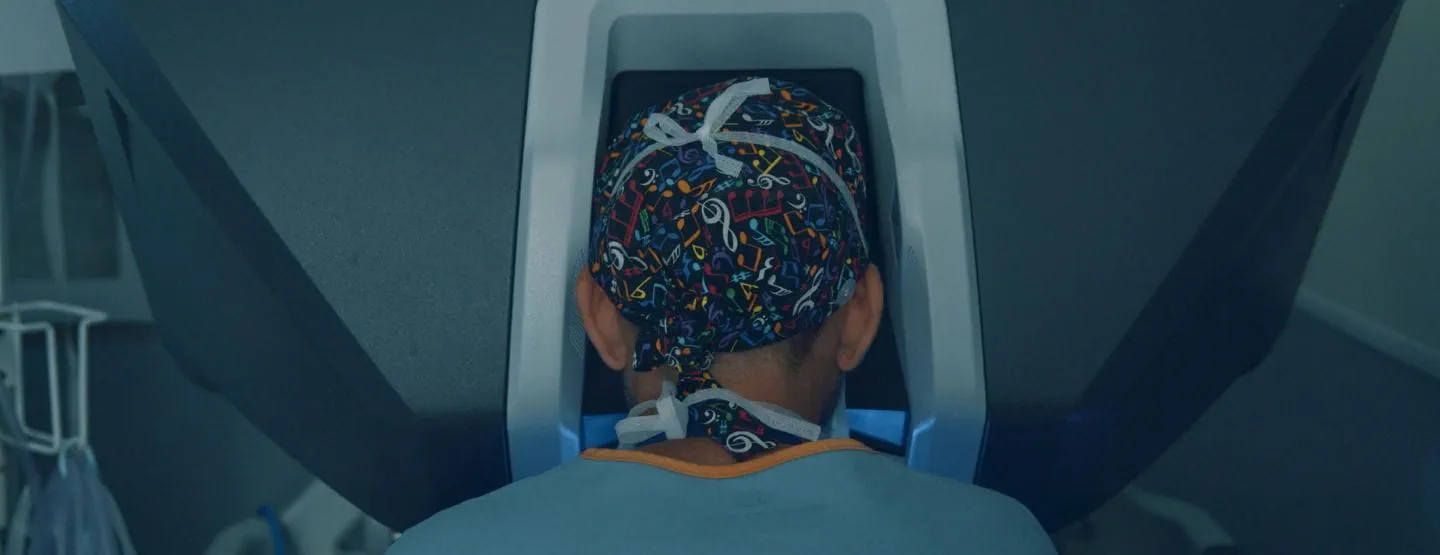
Robotic-assisted surgery combines the skill of a surgeon with advanced robotic instruments. During these procedures, the surgeon sits at a console near the operating table. They control robotic arms with joystick-like controls. The robot does not act independently — it responds only to the surgeon’s commands.
Robotic systems provide surgeons with a 3-D, highly detailed, magnified view of the surgical site through binocular-like lenses. These lenses can magnify the area up to ten times. This gives the physician better visibility to make precise, accurate movements. The small robotic instruments also allow surgeons to access hard-to reach areas in the body.
AI Integration in Surgery and Its Benefits
ProMedica hospitals are some of the first in the country to have access to robotic-assisted surgery equipment with new AI-integration. The latest da Vinci® surgical system from Intuitive uses AI to analyze surgical data, give real-time feedback and help specialists work together.
Data Analysis
The system collects information from each procedure, such as the number of movements, force of the instruments and how long the surgery lasts. Surgeons can review this data to refine their surgical techniques and make evidence-based decisions for future cases.
“This feature provides us with an education opportunity to help surgeons decrease the amount of time each patient spends in the operating room, therefore decreasing risk to the patient,” shares Stephen Stanek, MD, a general surgeon who specializes in minimally invasive surgery at ProMedica.
Tactile Feedback
One of the most significant improvements is force feedback technology. This technology allows surgeons to sense the push and pull forces on tissue through the robotic controls.
“Prior to this feature, we had to rely solely on sight to know if we were using enough or too little force with the robotic arms. Now, there is a meter to show us how much force we’re using, and the appropriate amount of tension comes through the robotic arms,” Dr. Stanek shares.
This feature helps reduce unnecessary pressure on delicate structures, improving patient safety. Based on preclinical data from Intuitive, this feature results in up to 43% less force used on tissue.
Real-Time Collaboration
Surgeons at different ProMedica locations can now remotely view the surgical field and offer guidance during complex or emergency cases. This allows other specialists to see exactly what the surgeon performing the procedure is seeing.
They then can provide more accurate, detailed and helpful advice for a successful outcome. This helps surgeons deliver excellent patient outcomes in unexpectedly complicated or emergency cases.
“Surgeons can log in to an application on their phone and get a live feed of exactly what the surgeon who is there in person is seeing,” Dr. Stanek explains. “This saves time and gives physicians a way to safely collaborate, which benefits the patient. This feature can also be used to teach surgeons across the country or the world specialized techniques for complex cases or operations.”
Benefits of Robotic Surgery for Patients
For patients, robotic-assisted surgery often means smaller incisions, less pain and faster recovery compared to traditional open procedures. Common advantages include:
- Shorter hospital stays.
- Reduced pain and discomfort.
- Reduced risk of infection.
- Minimal scarring.
- Lower blood loss and fewer transfusions.
- Faster return to normal activities.
These benefits make robotic surgery an attractive option for many individuals seeking minimally invasive procedures.
Additionally, robotic surgery is often safer for individuals with existing comorbidities, such as nicotine use, diabetes or obesity.
“ProMedica has robots available to use for surgeries 24 hours a day, and not just for scheduled surgeries. Our robots can be used for emergency cases such as appendectomies, gallbladder removals and gastric ulcers,” Dr. Stanek shares. “This allows for patients to experience the same benefits of robotic surgery, even in emergency cases.”
More and more surgeries are being offered robotically. While it can seem scary to a patient, robotic surgery has many benefits and often results in less time in the operating room, smaller incisions and reduced risk.
It’s also important to remember, that although AI integrations with robotics may be a relatively new advancement, robotic-assisted surgery certainly is not. Dr. Stanek has performed over 2,100 robotic operations in his career, and other surgeons on our team have upwards of 1,000 robotic procedures under their belt.
Robotic technology also improves the surgeon’s experience. Ergonomic consoles reduce physical strain, and advanced cameras provide high-definition views of the surgical site. Surgeons can control all settings from the console without leaving their position.
Robotics for Specialty Surgeries
Robotic-assisted surgery is particularly valuable in complex specialties such as hepato-pancreato-biliary (HPB) surgery, which involves the liver, pancreas and biliary tract. These procedures treat conditions like pancreatitis, bile duct stones, liver abscesses, gallstones and even cancers.
Kerri Ann Simo, MD, has led ProMedica’s HPB program since its inception, performing over 400 robotic-assisted surgeries. The technology allows her to operate through incisions less than an inch long. This offers patients quicker recovery and fewer complications.
“As robotic technology advances, it allows us to use it for more technical and challenging cancers. This allows us to use the robot to benefit more patients. However, we continue to choose the best approach on an individualized basis for each patient we care for,” shares Dr. Simo.
“With robot-assisted surgery, we have a wide range of motion that allows us to have a more natural control of our instruments,” explains Victoria Mi Kim, MD, a surgeon with ProMedica Physicians. “We also see a 3D view of the surgical site, allowing us to precisely pass through multiple planes when necessary.”
“The robot is a great tool to have but not always the best to use for every patient,” Dr. Kim explains. If robotic surgery isn’t appropriate, surgeons may choose laparoscopic or open techniques instead.
The Future of AI in Surgery
AI in surgery is still evolving. Future advancements may include real-time guidance based on data from thousands of previous procedures, even more sophisticated feedback systems, automatic suturing and even remote operations.
As one of the first health systems to have the da Vinci 5 system, ProMedica is at the forefront of surgical innovation. These innovations promise to make surgeries safer, faster, and more effective for patients and surgeons alike.
Stephen Stanek, MD
Dr. Stanek is a general surgeon with ProMedica Physicians. View his profile.
Kerri Ann Simo, MD
Dr. Simo is a fellowship-trained hepatopancreatobiliary (HPB) surgeon with ProMedica Physicians. View her profile.
Victoria Mi Kim, MD
Dr. Kim is a surgical oncologist with ProMedica Physicians. View her profile.
Subscribe to Our ProMedica Newsletter
Looking for inspiration on how to improve your health and well-being? Get trustworthy health news, wellness tips and inspirational patient stories delivered to your inbox twice a month with our free ProMedica newsletter.