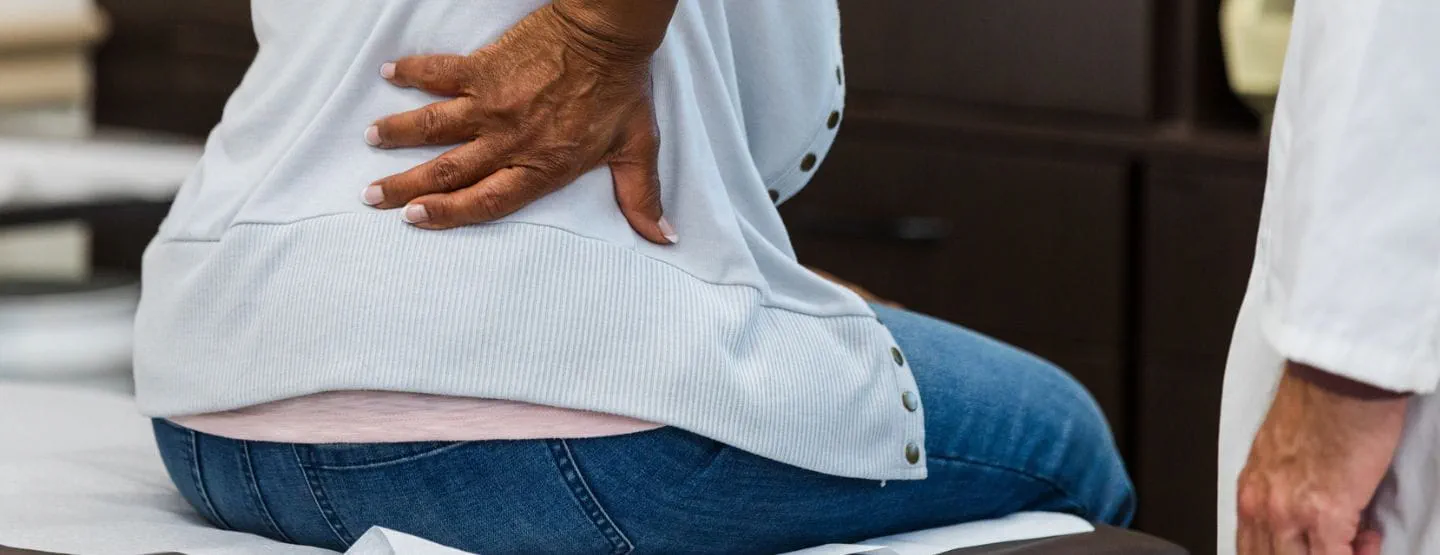
About half of Americans will experience back pain at some point in our lives. Unfortunately, finding the root cause of that pain can be challenging. There are many structures in the lower back – spinal discs, muscles, ligaments and joints. Knowing which one is causing pain can take testing and time.
If you’re having lower back pain, the sacroiliac (SI) joint could be the issue. About 25% of low back pain stems from sacroiliac joint dysfunction. Here’s how your doctor may determine if the SI joint is causing pain and how it may be treated.
What Causes Pain in the SI Joint
The SI joint connects the base of your spine to your hip bones.
“It acts as a heavy-duty shock absorber, transferring the weight of your upper body down into your pelvis and legs when you stand or move,” explains Kyle Andrews, MD, an orthopaedic surgeon with ProMedica Physicians.
Pain from the SI joint can develop over time or suddenly. Some of the causes include:
- Injuries, accidents and falls
- Pregnancy
- Sports
- Scoliosis
- Infection
- Repetitive lifting or strain
- Osteoarthritis
Like other types of back pain, pain from the SI joint can cause a dull ache in the lower back and buttocks region.
“One clue that it could be from the SI joint is if you feel pain primarily on one side of the body, over the back pocket area,” says Dr. Andrews. “If you have sharp pain when getting out of a chair or car, or increased aching when climbing stairs or standing on one leg, that could be a sign.”
Seeing a Specialist for SI Joint Pain
If the pain is persistent and interfering with your daily life, it’s important to see a specialist. Otherwise, your body will start to compensate for the pain with unnatural movements. This will add to your pain and could damage other parts of the body.
An orthopaedic specialist, physical therapist or sports medicine provider can help you get an accurate diagnosis and develop a treatment plan.
When you see a provider, they will want to review your medical history. They will also press on the pelvic bones to assess any tenderness and see if they can recreate your exact pain by performing specific physical stress tests.
Before deciding on a treatment plan, it’s important that you understand the path ahead. Dr. Andrews recommends asking your specialist the following questions:
- Based on my exam today, how confident are you that my pain is coming from the SI joint versus a pinched nerve or disc in my lower back?
- If we try an SI joint injection, will it be performed under live X-ray guidance to ensure accuracy?
- Will we use the injection to diagnose the problem, reduce inflammation, or both?
- If a combination of therapy and injections doesn't give me long-term relief, what does the timeline and transition to an interventional or surgical discussion look like?
Diagnosing SI Joint Pain with an Injection
When the SI joint is the cause of pain, standard X-rays and MRIs will often look normal. A specialist will typically use a fluoroscopically guided injection to diagnose and treat. This injection uses a live X-ray to make sure the specialist is injecting at the precise spot. These injections are considered the gold standard for management.
“A numbing medication is placed in the joint. If your pain drops significantly for a few hours, it confirms the SI joint is the true source of the pain,” says Dr. Andrews.
The injection can also include an anti-inflammatory cortisone.
“This helps reduce severe chronic inflammation, providing weeks to month of profound pain relief so you can comfortably participate in rehab,” Dr. Andrews adds.
Nonsurgical and Surgical SI Joint Treatment
Once the pain is managed through an injection, specialized physical therapy is the next step. It’s important to strengthen the surrounding structures of the body, including the core, glutes (buttocks) and hips.
Strengthening these will help protect and stabilize the joint. In the meantime, a tight pelvic support belt (SI belt) can be worn above the hips for support. Targeted anti-inflammatory treatments, including therapeutic injections can also help.
“These conversative treatments typically take from six to 12 weeks to show improvement,” says Dr. Andrews. “Ideally, this will help the patient sleep, work and enjoy daily activities with minimal, manageable discomfort and improved mobility.”
If the pain is still severely disruptive to daily life or you hit a plateau in progress after a full round of therapy and injections, you should talk with your specialist.
A minimally invasive procedure is available if conservative care and injections fail. During the one-hour procedure, small titanium implants are placed across the joint to stop the painful micro-motion. This SI joint fusion allows the bones to permanently grow together to reduce pain.
Improving Your Quality of Life
If you’re having significant lower back pain that affects your daily life, don’t tough it out. Determining the root cause may take time, but it will help set you on a path for relieved pain. SI joint dysfunction may be the cause, and treatments are available. Start with your primary care provider or make an appointment with a specialist.
Kyle Andrews, MD
This article was reviewed by Dr. Andrews for accuracy. Dr. Andrews is an orthopaedic trauma surgeon who cares for patients of all ages. He practices in Toledo and Sylvania. View his profile.
References
Raj MA, Ampat G, Varacallo MA. Sacroiliac Joint Pain. [Updated 2023 Aug 14]. In: StatPearls [Internet]. Treasure Island (FL): StatPearls Publishing; 2026 Jan-. Available from: https://www.ncbi.nlm.nih.gov/books/NBK470299/
Subscribe to Our ProMedica Newsletter
Looking for inspiration on how to improve your health and well-being? Get trustworthy health news, wellness tips and inspirational patient stories delivered to your inbox twice a month with our free ProMedica newsletter.