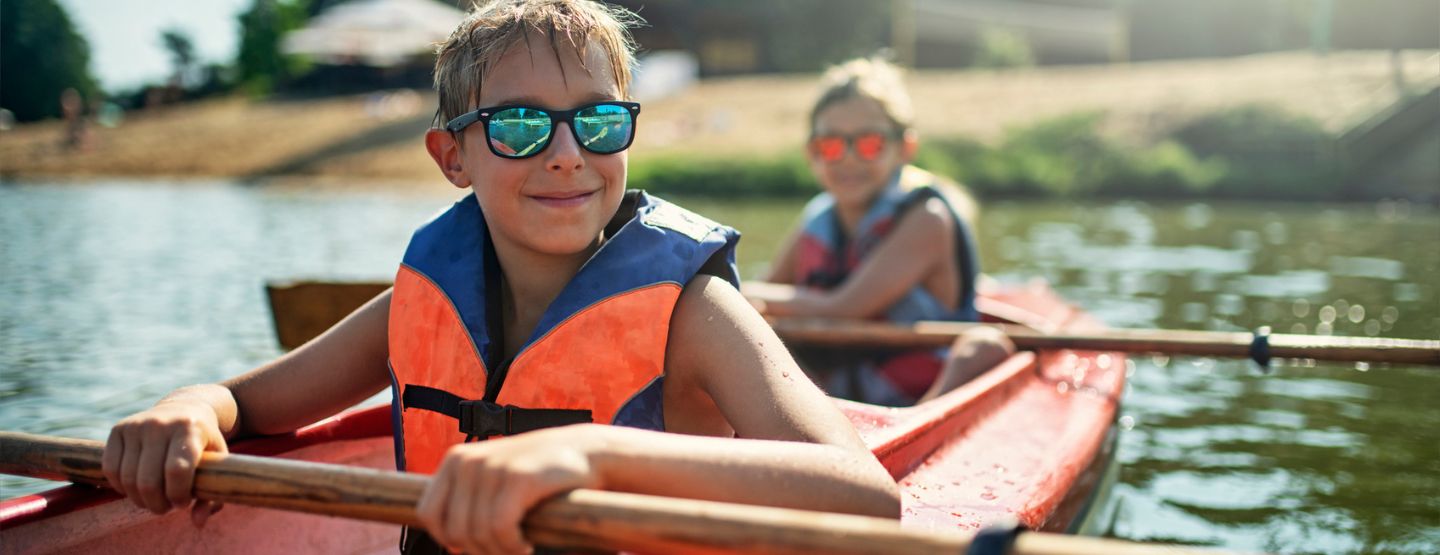
Are children’s sunglasses necessary or more of a fashion statement? According to Michele Schlagheck, OD, an optometrist with ProMedica Physicians Vision Associates – Toledo, the right pair of sunglasses can be very beneficial to your child’s current and future eye health.
Why Sunglasses Matter for Kids
First and foremost, children often spend more time outside than adults. According to the U.S. Environmental Protection Agency (EPA), nearly 80 percent of the average person’s lifetime UV exposure occurs before age 18. This makes eye protection that much more valuable for a child’s maturing eyes.
“The lens is the eye’s natural defense against UV rays. However, developing eyes can’t process out as many UV rays as an adult’s eyes,” Dr. Schlagheck explains.
Both UVA and UVB rays can be harmful to the eyes. UVB rays affect the lenses of the eyes and can even cause sunburn of the eyes. UVA rays can penetrate as deep as the retina, causing irreversible damage to your eyes.
What To Look For When Purchasing Children’s Sunglasses
Not all sunglasses are created equal. To make sure your child’s eyes are protected, purchase sunglasses with these features:
- 99 - 100% broad spectrum protection against UVA and UVB rays, or UV400 protection.
- Impact-resistant, polycarbonate lenses.
- A good and comfortable fit.
- A wrap-around style for the highest level of protection.
If you spend a lot of time near water or snow, polarized lenses can help reduce glare. Test if a lens is truly polarized by holding the sunglasses up to an electronic screen. Then, begin rotating the glasses. If they black out the screen at some point, they are polarized.
Dr. Schlagheck also recommends letting the child help pick out the sunglasses. If they find a pair that they like, they will be more likely to wear them.
Have a pair of sunglasses and aren’t sure if they offer adequate UV protection? Many optical departments can test them for you. Ask your eye doctor at your next visit if they have a UV meter, and if they are able to test the pair for you.
When Children Should Wear Sunglasses
“Children should wear sunglasses, ideally, any time they are outside. On sunny days, and cloudy or overcast days. Rain, snow and sand reflect UV rays, making their effects on the eyes even greater,” Dr. Schlagheck shares.
It’s also never too early to get their first pair! Children of any age can and should wear sunglasses. Infants under six months of age should be kept out of direct sunlight, but once they enter the sun it’s time to get them their first pair.
Children should wear sports goggles when playing sports to reduce the risk of eye injury. These can be tinted for outdoor sports.
“Ninety percent of childhood eye injuries could be prevented with the proper eye protection,” Dr. Schlagheck emphasizes.
What if my child wears glasses?
If your child wears glasses, request UV protection be added to their glasses’ lenses. UV protection can be added to clear lenses or may already be included in the lens material. This does not affect the appearance of the lenses or your child’s vision when looking through them.
If your child prefers a tinted lens when outdoors, you could purchase a pair of prescription sunglasses from your child’s eye doctor. Transition lenses are also a great option if you only want to keep track of one pair of glasses. These lenses will darken when exposed to sunlight and return to clear lenses when back indoors.
Michele Schlagheck, OD
Dr. Schlagheck is an optometrist with ProMedica Physicians Vision Associates - Toledo. View her profile.
Subscribe to Our ProMedica Newsletter
Looking for inspiration on how to improve your health and well-being? Get trustworthy health news, wellness tips and inspirational patient stories delivered to your inbox twice a month with our free ProMedica newsletter.