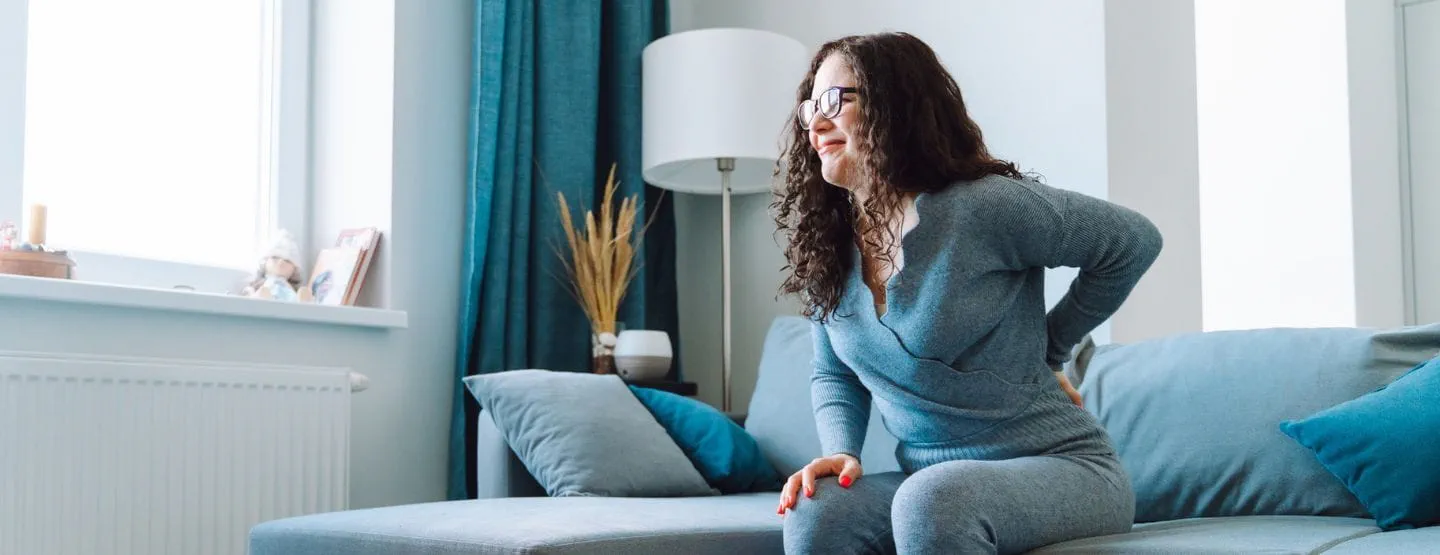
When your neck or back is hurting, it can affect everything you do. Whether you’ve had a recent minor injury or your pain has slowly developed over time, there are some things you can do at home to help ease the pain.
At-Home Treatments for Neck or Back Pain
Megan Yergler, MSN, APRN, FNP-C, is a certified nurse practitioner with ProMedica Spine Care. She treats patients with a wide range of neck, back and spine issues.
“Pain that is mild and does not radiate or interfere with activity or sleep may be minor enough to treat at home,” says Megan.
Here are some tips for overall spine health and managing spine pain at home:
- Keep moving. When you're in pain, the last thing you want to do is move, but this will make the pain worse over time. Regular movement like walking and gentle stretching can reduce stiffness and help relax tight muscles, support spinal stability and increase blood flow to promote recovery. Lack of movement can lead to muscle weakness and increased stiffness and tension.
- Improve your posture. Whether you’re seated or standing, be mindful of having good posture throughout the day. Focus on keeping your spine in a neutral position and keeping it supported. Use proper body mechanics while lifting and moving.
- Utilize heat and ice. Alternate heat and ice on the affected area. Heat will help loosen tight muscles and increase blood flow, while ice will help reduce inflammation. Apply each for 15 to 20 minutes before switching to the other temperature. Do not use heat or ice over topical medications.
- Take over-the-counter medicines. The use of over-the-counter medications such as anti-inflammatories (e.g., Ibuprofen, Aleve, Naproxen) and/or Tylenol/Acetaminophen, topical creams, ointments and patches can help relieve pain. Do not take Tylenol if you have liver disease. Do not take ibuprofen if you have a history of stomach ulcers or significant acid reflux, or are on anticoagulation therapy, or if you are pregnant. Consult your medical provider if you have heart, liver or kidney disease prior to taking anti-inflammatory medication.
- TENS unit. Transcutaneous electrical nerve stimulation (TENS) uses electrodes to distribute a mild electrical current. This helps block pain signals.
- Complementary therapies. Therapies such as massage and acupuncture can help stimulate blood flow, which is essential for a healthy spine. They can also release endorphins and relax tense muscles.
- If you smoke, quit smoking. Nicotine has many negative effects on the body, including inflammation and constricting blood vessels. This reduces the amount of blood and nutrients that are distributed throughout the body, including the spine.
When To See a Spine Specialist for Pain
If your neck pain or back pain doesn’t improve with at-home treatments. Ignoring the pain or working around it may only make things worse over time.
If the pain is moderate to severe, impairing your function, or you develop radiating pain, numbness or weakness in your arms or legs, it’s time to seek help from a professional.
“The neck, spine and back is all one continuous system. They distribute the nervous system to the rest of the body,” explains Patrick McCormick, MD, FACS, with ProMedica Physicians Neurosurgery – Toledo. “It works well if you keep your spine in good health, but there are many factors that can cause problems and pain.”
Getting to the root of your neck, back or spine pain will likely require some additional imaging to get a better look at the bones, tissues and nerves. X-rays, CT scans and MRI imaging are common tests used to help diagnose spine issues. According to Megan, here’s how each one helps:
- Spine X-rays help to identify degenerative changes, fractures and dislocations.
- CT scans offer better visualization of the vertebrae, intervertebral discs and spinal canal.
- MRI imaging provides the most detailed pictures of the spine and surrounding structures.
“Imaging can help determine if a fracture is new or old and identify herniated discs, degenerative changes, narrowing of the spinal canal (spinal stenosis), pinched nerves, congenital abnormalities, tumors and infections,” explains Megan.
Paired with a comprehensive exam, a provider can get a full picture of the health of the spine and the potential root cause of pain.
“A detailed physical exam helps to assess range of motion, weakness, abnormal reflexes, sensory changes and or balance impairment,” says Megan. “This can help distinguish serious conditions requiring further evaluation or more emergent treatment and to guide an appropriate treatment plan. A thorough history and physical exam can help identify suspected diagnoses, and imaging helps to confirm or rule them out.”
Common Conditions that Cause Neck or Back Pain
Common conditions that result in neck, back or spine pain include:
- Degenerative disc disease: As we age, our discs begin to lose fluid content, wear away and shrink. As the disc shrinks and our joints lose the fluid that lubricates them, the bones can start to rub together causing pain and bulging discs.
- Spinal stenosis: Herniated or bulging discs cause a narrowing of the spinal canal, which puts pressure on the spinal cord and nerves.
- Compression fractures: Typically, this is a result of age-related degeneration or osteoporosis. The spinal vertebrae get small cracks, causing them to collapse.
- Radiculopathy: Commonly known as a pinched nerve, this condition may cause numbness, tingling, nerve pain (sharp, burning, electric-shock like) or weakness in your arms of legs. Sciatica is one example of this where the sciatic nerve in the low back causes symptoms down the back of the legs. Pinched nerves can be caused by any of the conditions listed above. Each spinal nerve spreads to specific dermatomes (skin area) and myotome (muscle group) so knowing where your symptoms radiate helps us to determine if there are corresponding findings on imaging to match.
Medical Treatments for Neck or Back Pain
In addition to home remedies, formal treatments may help improve the condition that’s causing your pain. There are often many conservative treatments to try before surgery is considered. In fact, some people aren’t good candidates for surgery.
“Nine out of 10 patients will respond well to nonsurgical treatments, such as physical therapy or pain management,” explains Dr. McCormick. “Surgery may be needed as a last resort for some to correct something that may threaten injury to the spinal cord and or the nerves associated with the spinal cord."
Your specialist will work with you to determine the best course of treatment for your pain. They may even recommend a combination of treatments, including physical therapy, pain management or medications.
Patrick McCormick, MD, FACS
Dr. McCormick is a neurosurgeon with ProMedica Physicians Neurosurgery. View his profile.
Megan Yergler, APRN-CNP
Megan is a certified nurse practitioner with ProMedica Spine Care. View her profile.
ProMedica Spine Care is located in Toledo and Perrysburg. Our spine care experts are also available for appointments at their neurosurgery offices in Monroe and Adrian.
This article was reviewed by Patrick McCormick, MD, FACS, and Megan Yergler, APRN-CNP, for accuracy.
Subscribe to Our ProMedica Newsletter
Looking for inspiration on how to improve your health and well-being? Get trustworthy health news, wellness tips and inspirational patient stories delivered to your inbox twice a month with our free ProMedica newsletter.