Early-stage lung cancer often doesn’t come with any symptoms. This makes it easy for it to go unnoticed – sometimes, for years. Sadly, by the time lung cancer shows symptoms, it has often spread to other parts of the body. This usually makes it harder to treat.
The best way to detect lung cancer early, when it’s typically easiest to treat, is through a lung cancer screening.
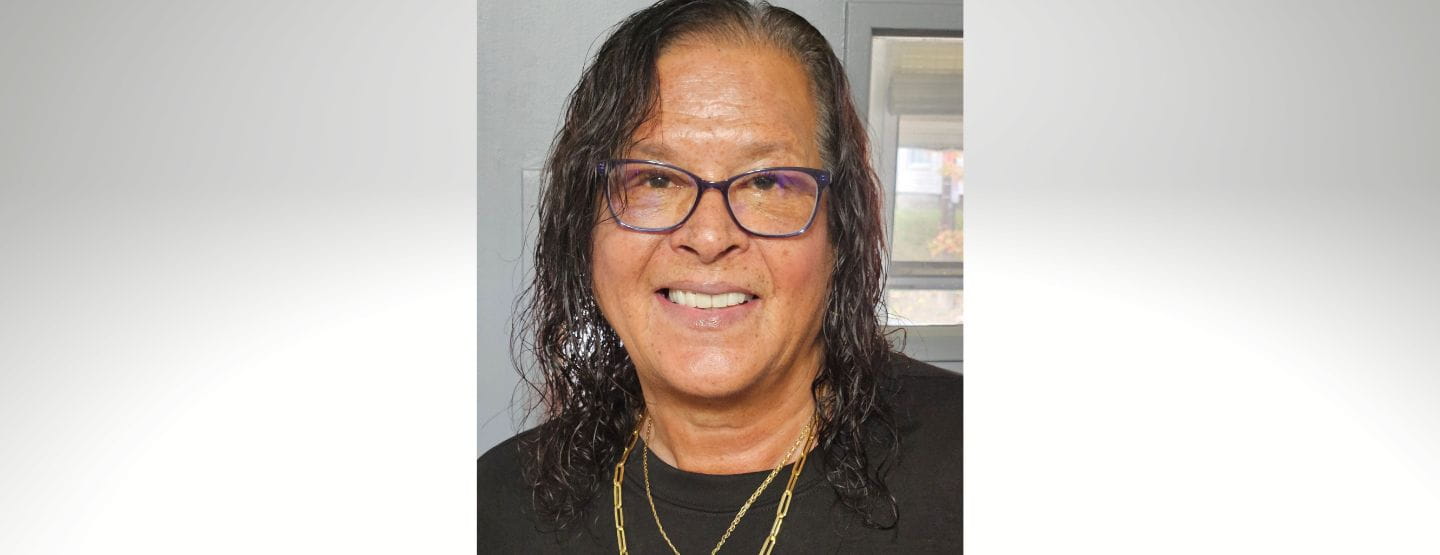
A routine lung cancer screening led to Kathleen Kerr finding out the news that no one wants to hear: she had cancer.
Kathleen’s Lung Cancer Journey
Kathleen found out that she qualified for a free lung cancer screening through her insurance. She decided to be screened even though she didn’t have any symptoms that would make her think she might have cancer. In 2021, she had her first lung scan and a nodule was detected on her lung.
Lung nodules (small bumps or masses) aren’t always cancerous. Most of the time, they aren’t serious, but they can be the first sign of cancer. So, when a lung nodule is detected, it’s important to stay on top of monitoring them and follow the guidance of your provider.
The only way that lung cancer can be officially diagnosed is through a biopsy of the affected area. After two years of monitoring, Kathleen’s physician, Ronald Wainz, MD, recommended a biopsy be performed.
In March 2023, a biopsy tested the cells of Kathleen’s lung nodule. It confirmed Dr. Wainz’ suspicions, and Kathleen was diagnosed with non-small cell lung cancer.
Thus began Kathleen’s treatment to becoming cancer free. In June 2023, Kathleen had a surgery to remove her right lower lung. Then, she received traditional chemotherapy for three months after the operation.
Today, Kathleen has been cancer free for two years. She still takes a chemotherapy pill and has lung scans and blood work done every six months. She’s on track to soon finish her medication and have scans and blood work done less often.
Kathleen offers a word of encouragement for those at risk for lung cancer: “You have to get the lung screening no matter what. Everyone is afraid to hear what’s wrong with them - don’t let that stop you. The sooner you find out the better. Being diagnosed early is what saved my life and why I’m still alive today.”
Dr. Wainz echoes Kathleen’s encouragement. He shares that the odds of survival are much higher, and treatment options often less aggressive, when lung cancer is found early.
“When non-small cell lung cancer is found when it’s isolated to one spot (stage 1), patients have a 70-80% survival rate. Sometimes, when it’s in this stage, it can be treated with surgery and chemotherapy isn’t needed,” Dr. Wainz shares.
What is a lung cancer screening?
A lung cancer screening is a low-dose CT scan of the lungs. If the scan shows any problems, more tests can be done to determine if it’s lung cancer and if more treatment is needed.
Dr. Wainz compares lung cancer screenings to breast cancer screenings. Those who are at risk of developing that type of cancer need to be screened yearly, even if they don’t have any symptoms of the disease.
Through a lung cancer screening, lung nodules (the first sign of lung cancer) can be detected early, before any symptoms appear.
Who should receive a lung cancer screening?
Lung cancer screenings are covered by many insurance plans for those at risk of lung cancer. Your doctor may recommend this lung cancer screening if you are 50-80 years old and currently smoke OR have quit smoking within the last 15 years AND have at least a 20 pack-year smoking history. A 20 pack-year means you have smoked one pack per day for 20 years, or two packs a day for 10 years.
What happens after a lung cancer screening?
If abnormalities are detected on a lung cancer screening, further investigation is needed. Most abnormal nodules found on the lungs are not cancerous, but it’s important to have them checked to be sure.
At ProMedica, patients receive specialized lung nodule care at ProMedica Cancer Institute’s Lung Nodule Clinic. “We recognize the need for patients with abnormal lung screenings to be seen quickly,” Dr. Wainz shares. Most patients are able to be seen at the clinic within one week of an abnormal lung cancer screening.
At your first visit, Dr. Wainz will review your history and imaging results. He will ask about any symptoms and do a physical exam. Your case will be reviewed within a week by a multidisciplinary case conference, which is made up of providers from six different specialties.
“The conference allows us to sit together as a care team and discuss the best management practices for each patient,” Dr. Wainz shares. “Patients who have their cases reviewed by a multidisciplinary team are thought to have better clinical outcomes than those who don’t.”
After discussing, additional imaging or a biopsy may be recommended.
“If you have a history of smoking, get screened,” Dr. Wainz emphasizes. “We aren’t often able to diagnose lung cancer in its early stages because there are no symptoms and people aren’t choosing to be screened. Most people don’t have symptoms until the cancer has spread and it’s less treatable. Get screened as soon as you meet the screening guidelines.”
Ronald Wainz, MD
Dr. Wainz is a pulmonologist with ProMedica Physicians. View his profile.
Subscribe to Our ProMedica Newsletter
Looking for inspiration on how to improve your health and well-being? Get trustworthy health news, wellness tips and inspirational patient stories delivered to your inbox twice a month with our free ProMedica newsletter.