It can happen during a game of softball or by stumbling on the sidewalk. Strains and sprains are different injuries, but how can we know the difference and what can we do if we have a strain or sprain? Marshall Ochi, DO, with ProMedica Sports Medicine Institute, explains strains and sprains and how they are treated.
Strains and Sprains: What's the difference?
“A strain is an injury that occurs to a muscle or a tendon, which link muscle to a bone. A sprain is an injury to a ligament, which connects bones to other bones,” explains Dr. Ochi. “Sprains and strains can both be uncomfortable, and they can even happen at the same time.”
Strains and sprains tend to occur from sudden movements (such as slips and falls) or overuse (from repetitive movements at work or in sports). Your age, history of injury and conditioning all affect your risk for strains and sprains.
Ankle sprains are the most common type of related injury. Other common injuries include knee sprains, hamstring strains, back and neck strains, and wrist strains.
RICES Therapy for Strains and Sprains
Treating strains and strains quickly is important to reduce pain and swelling. Dr. Ochi says that both types of injuries can benefit from a treatment method known as RICES therapy:
- Rest: Rest the injury and avoid activities that make it feel worse.
- Ice: Apply an ice pack to the affected area for up to 20 minutes at a time, several times a day. You can do this as often as every hour, immediately following the injury.
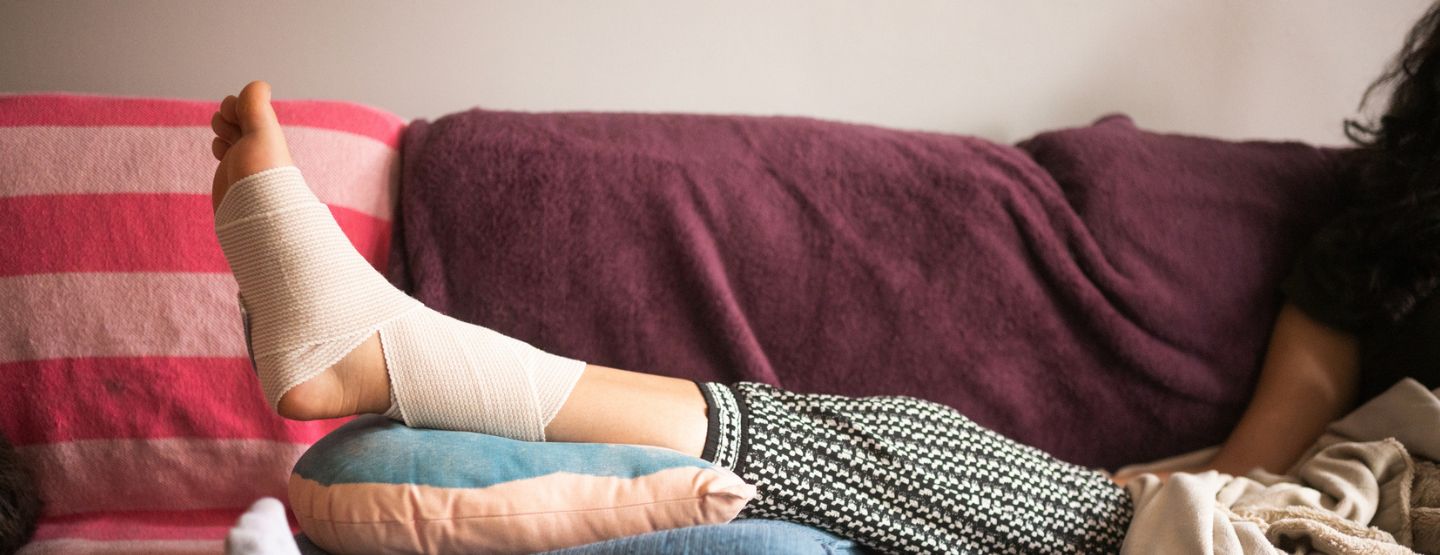
- Compression: Use an ACE wrap or compression sleeve to reduce swelling. You want the wrap to be snug but not tight enough to interrupt blood flow.
- Elevation: Keep the injured part of the body above the level of your heart when lying down.
- Support: Utilization of a support, such as an ankle brace for an ankle sprain, can also be helpful in the initial post injury phase.
Over-the-counter pain relievers can help manage symptoms. Acetaminophen addresses pain, while non-steroidal anti-inflammatory medications (NSAIDs), such as ibuprofen, can help with pain and inflammation.
Recovery and Rehabilitation
Recovery time for strains and sprains varies from injury to injury. Some strains and mild sprains may be better within days. Some may take a couple of weeks to get back to normal. Severe sprains may take even longer.
It may take a while for you to get back to feeling like yourself again. In the meantime, continue RICES therapy by resting, icing, compressing, elevating and supporting your injury. You can begin stretching and strengthening once your symptoms allow.
When To See a Doctor for a Strain or Sprain
"Ideally, RICES therapy should significantly improve your symptoms after a day or two. If you still experience a lot of pain and a significant reduction in your ability to do normal activities, the injury should be assessed by a medical professional," Dr. Ochi shares.
You could schedule an appointment with your primary care physician, sports medicine or orthopaedic specialist, or visit an urgent care to have your injury further evaluated. The provider will determine if additional testing, such as an X-ray or ultrasound, is needed. This imaging can give your care team a closer look to see the severity of the injury.
When you’ve healed enough to return to your regular activity level, you can help prevent future injury by rehabbing the muscles, tendons and ligaments around your injury. "Focus on remaining active and strengthening the supporting structures surrounding the injured area,” Dr. Ochi shares. "Additionally, focus on increasing flexibility. Being limber can help to prevent future injury."
Your health care provider may recommend physical therapy to help with the healing process and prevent re-injury. Physical therapy can help strengthen the area, improve your balance and increase your range of motion. A physical therapist can build a personalized plan to help you through rehabilitation and help you safely return to physical activity.
Marshall Ochi, DO
Dr. Ochi is a doctor of osteopathic medicine specializing in family medicine. He is the outreach and high school coordinator for the ProMedica Sports Medicine Institute. View his profile.
Subscribe to Our ProMedica Newsletter
Looking for inspiration on how to improve your health and well-being? Get trustworthy health news, wellness tips and inspirational patient stories delivered to your inbox twice a month with our free ProMedica newsletter.