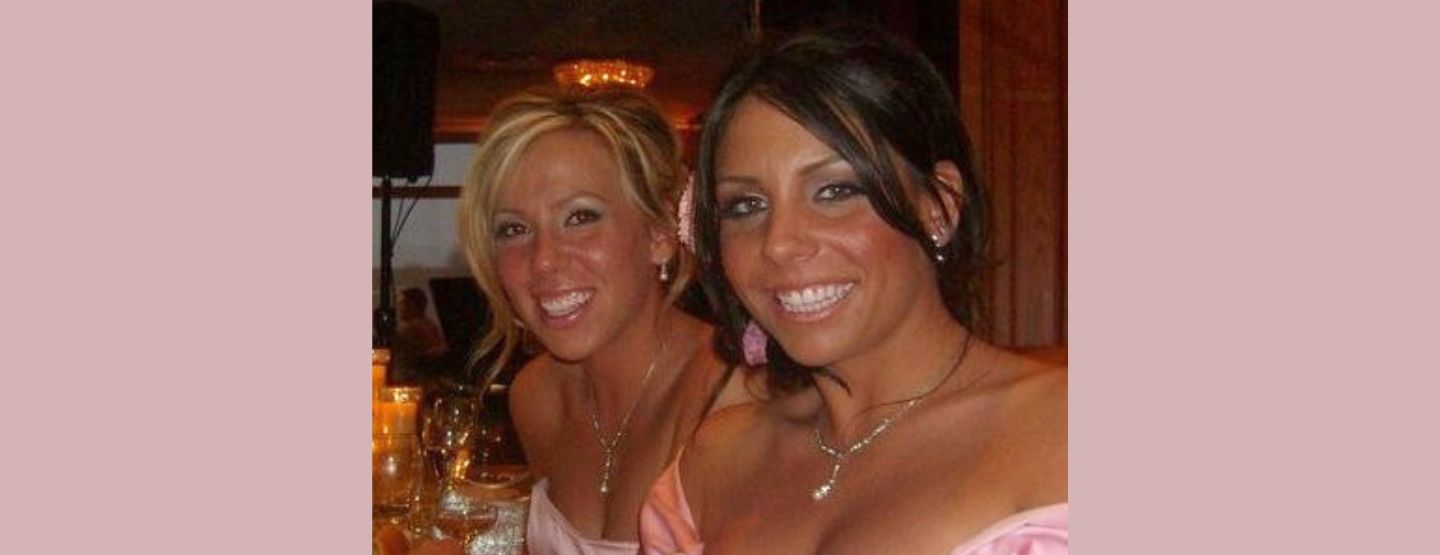
After their mother was diagnosed with breast cancer, sisters Amanda Pauken and Dawn Niehorster underwent genetic counseling. If they had the BRCA gene mutation, their risk for breast cancer and other cancers would be significantly higher.
Testing revealed that Amanda had the mutation; Dawn did not. But while Amanda was receiving treatment to reduce her risk for developing cancer, Dawn was diagnosed with breast cancer after a screening mammogram.
Although they had different diagnoses and lived hours apart, their treatment plans were intricately connected – double mastectomies, the same ProMedica surgeons, and a swapped surgical date so Dawn could be cancer-free sooner.
Finding the Right Breast Surgeon
Amanda received genetic testing in August 2024. Soon after learning of her genetic mutation, she began seeking out her care team. She met with Jessica Burns, MD, a ProMedica Physicians surgeon who is fellowship-trained in breast oncology.
“I ended up seeing Dr. Burns because of a personal recommendation from a friend, and then when I asked around, everybody who knew her from work or treatment couldn’t say enough good things about her,” says Amanda, who is also a ProMedica employee.
After the initial consult, she encouraged her sister Dawn to come to Toledo for care. Living in Youngstown, Dawn couldn’t find regional options that met her needs.
“I was diagnosed with stage zero DCIS (ductal carcinoma in situ), but it was huge at 11.4 cm,” explains Dawn. She later found out that because of its size, she had about a 50/50 chance of the cancer becoming invasive, increasing her desire for a double mastectomy.
“I already knew I wanted the double mastectomy because of my family history of breast cancer, but the first surgeon I met with wouldn’t consider it. I wanted somebody who would take my feelings and wants into consideration with my treatment plan,” says Dawn.
To meet Dr. Burns, Dawn joined her sister Amanda at one of her appointments. After, she knew she wanted Dr. Burns to be her surgeon, too.
“I loved her and her bedside manner. She is phenomenal,” says Dawn.
A Swapped Breast Cancer Surgery Date
Because Amanda scheduled her appointment with Dr. Burns before Dawn, she had an earlier surgery date. Amanda offered her surgery spot to her sister.
“When you have cancer, you want it out as soon as possible. Dawn’s surgery date would have been a month after mine, right around Thanksgiving and her daughter’s birthday,” explains Amanda.
Both sisters were receiving a bilateral mastectomy with direct-to-implant breast reconstruction. Dr. Burns coordinated the surgery date swap with her colleague, Kristoffer Sugg, MD, PhD, a ProMedica Physicians plastic and reconstructive surgeon. Dr. Sugg would be there on the day of surgery to insert the breast implants right after Dr. Burns completed the bilateral mastectomy.
For both women, who have busy lives and small children, limited downtime was a considerable factor in the type of breast surgery they chose. Other factors that can influence surgical options include the type and location of cancer, the overall health of the patient and even the individual’s previous surgeries.
A DIEP (deep interior epigastric perforator) flap surgery uses tissue from the lower abdomen for breast reconstruction. Although Dawn did not opt for a DIEP flap, she was surprised to learn that previous procedures, such as a tummy tuck, can affect your reconstructive options.
“You never want to think about having breast cancer when you’re younger, but certain procedures could put you in a harder position with your reconstruction options in the future,” she says.
After successful initial surgeries, the sisters are now focused on their continued recovery and future reconstructive surgeries with Dr. Sugg. Unlike breast augmentation, multiple surgeries are very common with breast reconstruction. Patients can also experience side effects like discomfort, numbness and pain in the chest after breast cancer surgery.
Lifelong Monitoring and Care
Amanda and Dawn will also need lifelong monitoring for cancer prevention. Because Dawn was able to have a bilateral mastectomy, she’s reduced her breast cancer risk to that of an average person.
Both sisters received genetic counseling to understand and better manage their cancer risk. Amanda chose to have her uterus and ovaries removed by Kathleen Essel, MD, a ProMedica Physicians fellowship-trained gynecologic oncologist.
“The entire process from beginning to end has been very informative and supportive,” says Amanda. “From the genetic counselor to Dr. Essel, to Dr. Burns, to Dr. Sugg. It’s been the best care. I don’t think people realize how fortunate we are at ProMedica to have good providers in so many different specialties.”
Amanda and Dawn were both pleasantly surprised by how comfortable they felt with a male reconstructive surgeon, too.
“Sometimes there’s a stigma around male doctors doing breast reconstructive surgery,” said Amanda. “But Dr. Sugg’s bedside manner makes you feel at ease. You’re in such a vulnerable state as a patient and he does a great job of making you feel like everything is going to be OK.”
“I’m so happy with my results,” says Dawn. “It’s been a wild ride, but I can’t tell you how grateful I am for both Dr. Burns and Dr. Sugg, as well as my sister.”
Subscribe to Our ProMedica Newsletter
Looking for inspiration on how to improve your health and well-being? Get trustworthy health news, wellness tips and inspirational patient stories delivered to your inbox twice a month with our free ProMedica newsletter.