
At the Forefront of Redefining Healthcare
For more than 10 years, ProMedica has been at the forefront of driving change in how healthcare is delivered. We're committed to creating quality, equitable health outcomes that improve the well-being of communities across our country. We do this through promising interventions, industry-leading analytics and research, and local and national partnerships.
Thought Leadership
Papers and Columns by our Experts
Transformative change relies on collaboration. Our experts at the ProMedica National Social Determinants of Health Institute want to fuel your inspiration to be a catalyst of change in your own community. If you read something you like, please share it with others. Together, let's keep the conversation going about ways we can improve the health and well-being of our communities.
ProMedica Looks to Home Improvement to Help Transform Health Care
In nearly 6 million American homes, there are hazards that put the inhabitants’ health at risk. These hazards jeopardize people’s safety and add substantial costs to the healthcare system. Research shows that housing-based triggers linked to asthma are responsible for $5 billion in preventable medical expenses each year alone.
Community Engagement Drives Equitable Social Transformation
As we consider the greatest opportunities to support our community, particularly through the lens of equity, helping drive reinvestment in traditionally disinvested neighborhoods like the Junction Neighborhood is critical.
Beyond screening: Integrating social support into clinical practice
ProMedica began screening for social determinants in early 2015, conducting depression screens across its acute care and ambulatory settings. By 2017, we had expanded to a fully comprehensive screening that includes 10 domains and 24 clinically validated questions, applied across all of our 48 primary care offices.
Reducing Infant Mortality and Improving Infant Vitality: The Critical Role of Authentic Community Connection and Deep Listening
The infant mortality issue in Lucas County, the state of Ohio, and the nation – particularly for Black Americans – is dire. ProMedica has adopted a broad, multipronged approach to improving our infant vitality, starting with helping build a community coalition of organizations with infant vitality as a central focus.
COVID-19: Meeting our Neighbors' Needs Using a Combination of Community Engagement and Data to Drive Community Support Strategies
The COVID-19 pandemic has exacerbated critical challenges that already existed across our communities. Even before the pandemic, many were grappling with impossible financial decisions every month and a way to make ends meet. How does a household choose between medication, rent, transportation, bills, or food when all are critical to health and well-being? ...
In the News
Our work and experts in Social Determinants of Health are regularly cited and quoted in state, regional and national publications. Promising results from ProMedica's food-as-medicine approach were even highlighted in the Wall Street Journal.
Data and Research
Data and research are essential in linking social determinants of health to improved health outcomes and decreases in cost and utilization. As a leading healthcare provider, ProMedica has produced proof points that are driving transformational and lasting change in the way we invest in health.
In 2014, ProMedica began screening patients for social determinants factors. Then we began connecting those patients to appropriate interventions. Over time, we began to find that applying these proactive interventions could become a model of preventable treatment. This decreases future healthcare costs and utilization and increases healthier and more effective outcomes.
Ebeid Data Nerve Center
ProMedica has partnered with Socially Determined, a healthcare technology and analytics company, to create the Ebeid Data Nerve Center. ProMedica's clinical excellence and deep data structures are integrated with Socially Determined's powerful analytic capabilities. This allows the Ebeid Data Nerve Center to focus on the needs of specific patient cohorts that could benefit from standardized interventions that are designed to improve healthcare outcomes.
Groundbreaking ROI
Addressing Food Insecurity
According to a 12-month study, use of the ProMedica Food Clinic among patients resulted in a reduction of healthcare costs.
Reduced emergency department usage: Medicare patients’ usage went down 18%, while those who did not use the food clinic had a 5% increase of emergency department usage. Medicaid patients’ usage was reduced by 11%, while those not using the Food Clinic saw a 6% reduction.
Lower readmission rates: Medicare patients reduced readmission by 5% while the group without the Food Clinic increased by 8%. Medicaid patients who used the Food Clinic reduced readmissions by 1%, while the other group without the Food Clinic increased by 4%.
Changes in per member per year medical costs: Food Clinic Medicare patients reduced their per member per year medical costs by 6%, while the other group saw an increase of 7%
Improving Birth Outcomes
In 2007, ProMedica partnered with Northwest Ohio Pathways Hub to improve birth outcomes for low-income pregnant women, residing in Lucas County, by aligning social and medical resources to improve infant vitality. The Pathways Hub Care Coordination System relies on community health workers and other care coordinators to develop individualized care plans which address social determinants of health, and to also assist high-risk pregnant in overcoming barriers that impact their health and well-being.
In 2018, studies of Centene Corporation's Buckeye Health Plan's clients showed that high-risk mothers without HUB coordination were 1.55 times more likely to deliver a baby needing a special care nursery or neonatal ICU admission. In addition, using HUB care coordination produced a 236% return on investment. By partnering with Pathways HUB, ProMedica is part of a solution to improve access to care and reduce healthcare costs.
Related News & Stories

Starving for a Solution: Hunger as a Health Issue
In countless kitchens, pantries and dining rooms across the country, one of America’s most dire public health crises is being served up

ProMedica Celebrates National Nurses Week
Nurses at ProMedica and throughout the country were honored May 6-12. Hear why they're passionate about what they do.
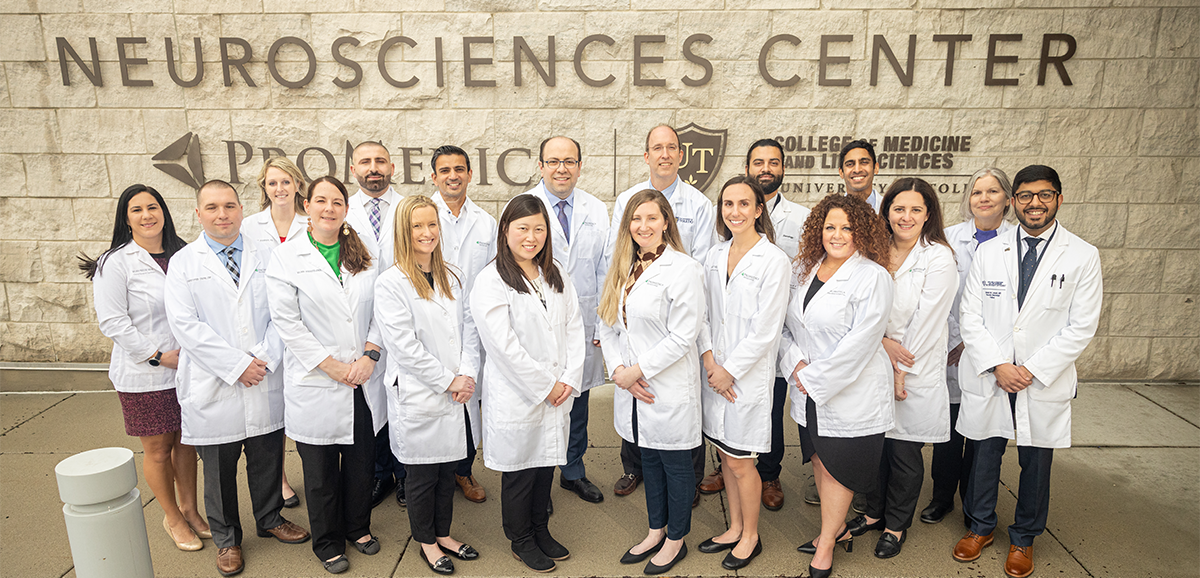
ProMedica Toledo Hospital Stroke Team Receives National 2023 Voter's Choice Stroke Hero Award
ProMedica is pleased to announce that the ProMedica Toledo Hospital Stroke Team has received the 2023 Voters' Choice Stroke Hero Award