Facing an autism diagnosis can send a family into a whirlwind of uncertainty. It's normal to feel overwhelmed with questions and concerns about your child's future.
At ProMedica, our goal is to ease your fears, answer your questions and provide critical support services for the whole family.
Wherever you are in your child's autism journey, know that our doctors and specialists are available to provide the resources your child needs to live a happy and healthy life.
Understanding Autism
Having answers always helps. We're here with answers to your questions about what your child is experiencing. Autism, also known as autism spectrum disorder (ASD), is a developmental disability that causes major social, behavioral and communication problems. It's a lifelong condition that affects one in 59 children in the United States.
ASD describes several different conditions that used to be diagnosed separately, including:
- Autistic disorder.
- Pervasive developmental disorder not otherwise specified (PDD-NOS).
- Asperger's syndrome.
Signs of Autism
You may first notice signs of autism before your child turns three. But symptoms most often appear within the first 12 to 18 months.
Remember, autism spectrum disorder affects everyone differently. Symptoms vary from child to child. The most important thing is to talk with your pediatrician about your concerns.
Communication problems are often the first signs of autism. A child with autism may not:
- Babble or respond to his or her name by 10 months.
- Be soothed by mom's voice by three months.
- Follow simple spoken directions.
- Give big smiles by six months.
- Imitate simple words or sounds by 15 months.
- Locate objects when asked by 15 months.
- Make eye contact.
- Seem startled by loud sounds by three months.
- Understand common words such as "no" or "bye-bye."
- Want to be with other people.
Along with having communication problems, a child with autism may:
- Arch his or her back or make other unusual body movements.
- Be extremely irritable.
- Frequently choke or gag.
- Have a floppy or limp body.
- Have stiff arms or legs.
- Make minimal gestures – such as pointing, reaching and waving – by 12 months.
- Only use one side of the body.
Risk Factors
Autism can affect children of all races, ethnic groups, education levels and incomes. It's almost four times more likely to affect boys than girls.
There's no known single cause of autism. Researchers are still looking into why some children develop autism and others don't.
Risk factors for autism may include:
- A sibling with autism.
- Genetic conditions, such as Rett, fragile X or Down syndromes.
- Low birth weight.
- Older parents.
There's no proven link between vaccines and autism.
Diagnosis
Your child's pediatrician will perform developmental tests during the first two years of check-ups. A doctor who thinks your child may have an autism spectrum disorder will suggest a diagnostic evaluation, which looks at your child's behavior and development. This may include:
- Genetic tests.
- Hearing tests.
- Neurological (nervous system) tests.
- Medical tests, such as blood tests.
- Vision tests.
In some cases, your child's pediatrician may want you to go to a specialist who does the diagnostic evaluation. These specialists can include:
- Child psychiatrist or psychologists.
- Developmental pediatricians.
- Occupational therapists.
- Pediatric neurologists.
- Speech and language therapists.
Treatment
While there's no single treatment or medicine that can cure autism, there's hope and help. Behavioral and communication therapies have been shown to help improve the way a child functions in life, especially if therapy is used early.
At ProMedica, you'll find in-depth applied behavioral analysis (ABA) services at the Finnegan Family Autism Center at ProMedica Russell J. Ebeid Children's Hospital. That's where our board-certified behavior analysts, special educators, speech and language pathologists and behavior therapists will focus on helping your child with:
- Behavior.
- Communication.
- Life skills that fit your child’s developmental level.
- Play and social skills.
Your child will also have a personalized treatment plan that includes:
- Behavioral and educational consultation.
- Behavioral therapy.
- Functional behavior assessment.
- Intensive applied behavior analysis intervention.
- Ongoing evaluations.
- Speech and language services.
Your child will start treatment with one-on-one sessions and then move into small group settings. Our specialists also encourage parents and family members to be involved with the treatment.
Your child's pediatrician or specialist may also prescribe some medicines to help manage your child's autism-related symptoms. These symptoms may include high energy levels, depression, seizures or inability to focus.
Featured Locations

ProMedica Russell J Ebeid Childrens Hospital WIC Office
Welcome to ProMedica Russell J. Ebeid Children’s Hospital - WIC Office Toledo, Ohio. Get driving directions, hours of operation, learn about treatment and therapies and more.
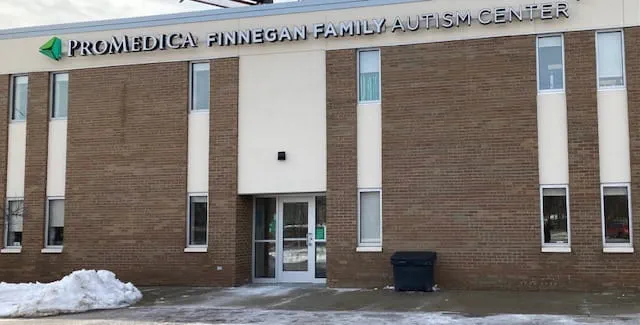
ProMedica Russel J Ebeid Childrens Hospital Finnegan Family Autism Center
Welcome to ProMedica Russell J. Ebeid Children's Hospital Finnegan Family Autism Center Toledo, Ohio. Get driving directions, hours of operation, learn about treatment and therapies and more.
Related Services & Conditions
Behavioral Health
With private, compassionate psychiatric and counseling services, we'll help you take control of your mental health and improve your wellbeing.
Pediatric Psychiatry
Children and adolescents have specific mental and behavioral health needs. Our programs and specialists are specially trained to engage — and listen to — your child.