An irregular heartbeat, known as arrhythmia, can happen suddenly and take you by surprise. It can be scary, too. That's why it's important to act quickly and work with a team you trust to understand your condition. ProMedica's electrophysiologists offer specialized arrhythmia care in Toledo. They assess, diagnose and treat irregular heart rhythm problems, including atrial fibrillation (AFib). ProMedica cares about your peace of mind. That's why we offer you high-quality, best-in-class care close to home.
Our Approach
Electrophysiology (EP) is the study of heart rhythms. Your heart makes electrical impulses that coordinate the contractions of its different parts. These contractions create movement – your heartbeat or heart rhythm – which keeps blood flowing through your heart the way it should.
Cardiac electrophysiologists are specially trained cardiologists. These heart specialists diagnose irregular heartbeats and treat patients who are dealing with heart rhythm disorders.
A Center Dedicated to Heart Arrhythmias
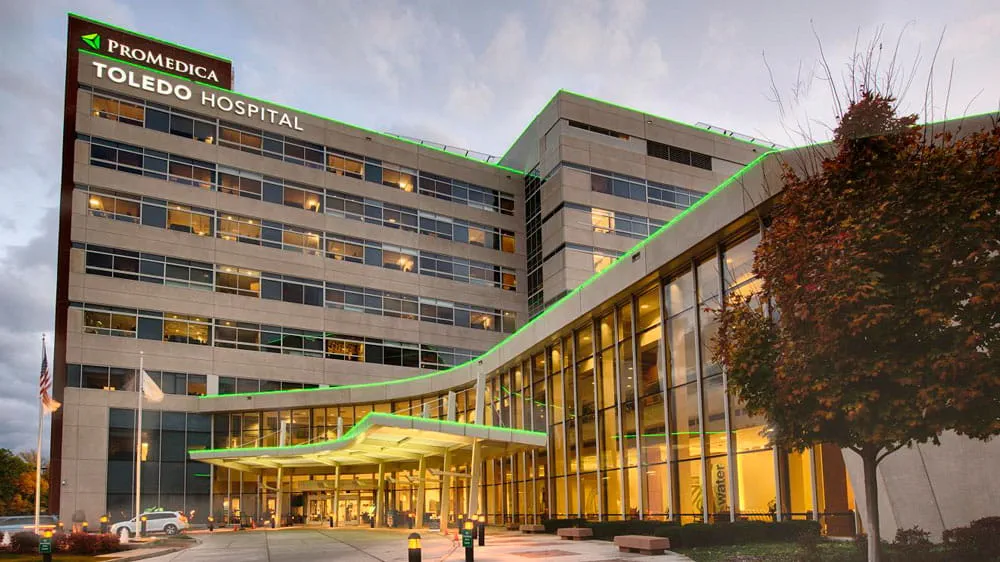
The Heart Rhythm Center is a brand new, state-of-the-art facility on the second floor of ProMedica Toledo Hospital. Providing the highest quality of heart rhythm care in Toledo, the center treats simple to complex heart arrhythmias.
Heart Devices for Abnormal Heart Rhythms
Your heartbeat is started and controlled by a natural electrical system. It coordinates the contractions that pump blood through your heart and out to the rest of your body.
Based on your age and overall health, your heart contracts and dilates 60 to 100 times a minute. But when your heart has trouble starting a heartbeat or naturally pacing your heart rhythm, your body may not get enough blood.
Pacemakers and implantable cardioverter defibrillators (ICD) are the two types of heart devices that treat irregular heartbeats. A surgeon implants one of these devices to send electrical pulses to your heart. This should reset your heart to its normal rhythm.
ProMedica's experienced team of cardiac electrophysiologists will help you decide if a pacemaker or an ICD is the best way to treat your abnormal heart rhythm. They're highly skilled at implanting these devices and the procedures can be done close to home in the Heart Rhythm Center at ProMedica Toledo Hospital.
Pacemakers
Pacemakers are small devices that generate pulses to prompt the heart to beat normally. There are two types of pacemakers – biventricular and leadless pacemakers.
Biventricular pacemakers are used for ventricles (heart chambers) that don't contract at the same time. They work to pace both ventricles to contract in unison.
Leadless pacemakers are a newer type of pacemaker technology that removes the need for a surgical pocket and insulated wires (known as "leads") to pace the heart. Instead, the leadless pacemaker is a self-contained generator and electrode system that's implanted directly into the right ventricle. Since it is only placed in one ventricle, it is also called a ventricular pacemaker.
Implantable Cardioverter Defibrillator (ICD)
An implantable cardioverter defibrillator (ICD) is similar to a pacemaker. Some ICDs even have pacemakers built into them. An ICD device can send the same type of low-energy pulses to your heart that pacemakers do, but it can also detect more life-threatening arrhythmias. Then it will send a high-energy pulse if an arrhythmia becomes dangerous or your heart stops beating. For this reason, ICDs are advised for patients who are at high risk for a life-threatening ventricular arrhythmia.
Subcutaneous Implantable Cardioverter Defibrillator (S-ICD)
A subcutaneous implantable cardioverter defibrillator (S-ICD) has all of the benefits of an ICD with less risk because it's not attached to the heart. S-ICDs are placed under the skin and are safer to implant because there's no risk of injuring a blood vessel.
Featured Locations
Toledo
Heart Rhythm Center
Discover what ProMedica Toledo Hospital Heart Rhythm Center has to offer.

ProMedica Physicians Monroe Cardiology
Click here to learn about the services we offer. Get driving directions, contact information, operating hours and more.
ProMedica Physicians Monroe Cardiology - Amin
Click here to learn about the services we offer. Get driving directions, contact information, operating hours and more.
ProMedica Physicians Cardiology - Monroe
Click here to learn about the services we offer. Get driving directions, contact information, operating hours and more.
ProMedica Physicians Cardiology - Toledo
Click here to learn about the services we offer. Get driving directions, contact information, operating hours and more.
ProMedica Physicians Cardiology - Fremont
At ProMedica Physicians Cardiology Fremont, our board-certified experts deliver comprehensive heart care. Schedule with us for innovative treatments and personalized service.
ProMedica Physicians Cardiology - Bowling Green
Experience top-tier heart care at ProMedica Physicians Cardiology. Our expert team in Bowling Green offers comprehensive services and innovative treatments. Schedule your appointment today.
Related Services & Conditions
Atrial Fibrillation (AFib)
AFib is the most common heart rhythm problem, and can be treated. Our AFib specialists are here to help with cutting-edge technology and cardiac expertise.