Our Approach
All women need gynecologic care, and they need it to be right for them. Your board-certified gynecologist at ProMedica will establish a relationship with you in order to understand your healthcare needs, especially your reproductive health. To help you stay healthy throughout your life, we offer:
- Consultation on gynecologic surgeries and on alternatives to hysterectomy.
- Diagnosis of and treatment for sexually transmitted diseases.
- Fertility evaluations and family planning.
- Help with menstrual difficulties and menopause.
- Hormone replacement therapies.
- Pap tests to check for cervical cancer.
- Regular wellness exams.
Our Services
Annual Gynecology Visits
Our top priority is to keep you well, and that starts with your yearly gynecology checkup. These checkups are important for any girl or woman who is sexually active. If not, these exams should start at age 13 to 15.
During this visit, your gynecologist will listen carefully to any symptoms or problem you may have. You may also have some of the following tests and procedures:
- Breast exam: Your gynecologist is an expert at checking for any lumps or other abnormalities in your breasts, and will do it quickly and efficiently.
- General health check: Your personal and family health history can offer clues to your health today. That's why we'll ask about any conditions you or someone in your family have had. Your nurse will also weigh you, take your blood pressure and may also ask you to take blood and urine tests.
- Internal bimanual exam: This test is done to check for problems in your cervix, uterus, fallopian tubes and ovaries. To complete the bimanual exam, your provider inserts two gloved, lubricated fingers into your vagina while lightly pressing on your abdomen with the other hand. This is done to feel around for any growths or abnormalities.
- Pap test: This test is done during your pelvic exam to check for cervical cancer and other problems. Your gynecologist uses a small brush to collect cell samples from your cervix, which are sent to a lab for testing.
- Pelvic exam: It's normal to feel uneasy about this exam, but it's important to your health. Your gynecologist will examine your vagina and cervix. You may feel some pressure during this exam, but it shouldn't be painful.
- STD tests: If you're sexually active, you may have a sexually transmitted disease (STD) even if you don't have symptoms. Your gynecologist may take a swab of cells during your pelvic exam, or order blood or urine tests, to check for STDs such as gonorrhea, chlamydia, syphilis or HIV.
Your gynecologist will also help you know how to listen to your body, so you can tell what's normal and recognize when there may be a problem. For example, many women have chronic pelvic pain yet they suffer in silence. If this includes you, please make an appointment. We're here to help.
Birth Control Guidance
When you choose a method of birth control, you'll be considering many issues — most of them personal. Your ProMedica gynecologist can give you the information you need to choose which of these options is best for you:
- Barrier methods: This includes condoms, diaphragms, cervical caps and contraceptive sponges. All of these block the sperm from fertilizing the egg.
- Birth Control Pills: With about 12 million women in the United States using birth control pills, they're by far the most common method of birth control and are proven to prevent pregnancy when you take them correctly.
- Hormonal methods: Birth control pills, a contraceptive implant (Implanon), a contraceptive injection (Depo-Provera), the vaginal ring (NuvaRing) and the contraceptive patch (Ortho Evra) are all examples of hormonal birth control. They keep you from ovulating, so there is no egg for sperm cells to fertilize.
- Intrauterine devices (IUDs): These include the copper IUD (ParaGard) and hormonal IUD (Mirena). Both work by changing the way sperm cells move so they can't fertilize the egg.
- Sterilization: Tubal ligation, or having your tubes tied, keeps your eggs away from sperm cells. Essure® is a permanent, non-surgical way to keep eggs away from sperm.
- Natural family planning, or the rhythm method: With this type of birth control, you avoid intercourse based on your basal body temperature and your cervical mucus, which can tell you when you will ovulate.
Gynecology Care for Adolescents
If you have a young daughter, you've probably thought about "the talk." This can mean talking to her about the body changes she'll experience with puberty, along with everything that follows as she gets older.
We can help with this. Your gynecologist can give you ideas about how to talk with your daughter about sex, sexually transmitted diseases (STDs), and the health care she will need as she grows up.
Your Daughter's First Gynecologic Exam
This is an important doctor visit, since it can set the tone for your daughter's future healthcare experiences. The gynecologists at ProMedica understand how to talk with girls and how to put them at ease.
Schedule your daughter's first gynecologic exam when she's 13 to 15 years old or when she becomes sexually active, whichever comes first. If you don't know how to talk about sex with your daughter, your gynecologist can give you some ideas for how to proceed.
Important Immunizations
There are vaccinations that can protect your daughter from several diseases and may be given before her first gynecologic exam, including:
- Cervical cancer vaccine: Most cervical cancers are caused by human papillomavirus (HPV). Gardasil and Cervarix are FDA-approved vaccines that prevent most cervical cancers if they are given before your daughter is exposed to the HPV virus. Both should be given between the ages of 11 and 12 years, in a series of three injections over a six month period. They can prevent vaginal and vulvar cancer, and Gardasil can also prevent genital warts and anal cancer.
- HPV vaccine: The human papillomavirus (HPV) vaccine protects against four major types of HPV. This can help your daughter avoid most genital warts and most cervical cancers. This vaccine is given in three doses, with the first recommended between the ages of 11 and 12 years. The second dose is given one or two months after that, and the third dose is given six months after the first injection.
Menopause Counseling
Your sexual health and needs may change around your menopause years. We can recommend a course of action that will help you adjust to your body's changes. Depending on your symptoms and their causes, we may recommend counseling, education or medication.
Screening and Prevention
Screenings can point out your risk factors for conditions such as cancer, cardiovascular disease and osteoporosis, which tend to happen later in life. Once you know your risks, you can work with your doctor to determine the best combination of diet, lifestyle changes and medications to help you avoid these conditions. If you are diagnosed with a condition, your doctor will recommend an effective treatment plan.
Surgical Treatment
A number of conditions of your reproductive system may require surgery. Surgeons at ProMedica use a state-of-the-art method called da Vinci® Surgical System, which is the least invasive type of gynecologic surgery so you can get back quickly to the activities you enjoy.
We use the da Vinci® Surgical System for these surgical procedures:
- Cervical cancer treatment.
- Diagnostic laparoscopy.
- Endometrial cancer and endometriosis treatment.
- Hysterectomy.
- Pelvic pain procedures.
- Pelvic reconstruction.
To learn more about gynecologic robotic surgery, call 419-291-4575
Lifestyle Assessment
Your gynecologist plays an important role in your overall health. We can look at all aspects of your lifestyle and help you identify changes you can make to be healthier.
We can provide dietary education and counseling to help you reduce menopausal symptoms and your risks for cardiovascular disease, osteoporosis and breast cancer. We can also make recommendations for being active to help your heart, your lungs, your mood and manage your weight.
Sometimes we may connect you with other services, such as a weight reduction program that uses prescription weight-loss medications, a physician-monitored weight-loss program or a consultation with a dietitian. And if you smoke, we can help you quit. We're here to be a partner in your health.
Featured Locations

ProMedica Physicians Gynecology
Click here to learn about the services we offer. Get driving directions, contact information, operating hours and more.

Flower Hospital
Surgery Center
Discover what ProMedica Flower Hospital Surgery Center has to offer.

Toledo Hospital Surgery Center
Discover what ProMedica Toledo Hospital Surgery Center has to offer.

Memorial Hospital
Surgery Center
Discover what ProMedica Memorial Hospital Surgery Center has to offer.

Defiance Regional Hospital
Surgery Center
Discover what ProMedica Defiance Regional Hospital Surgery Center has to offer.
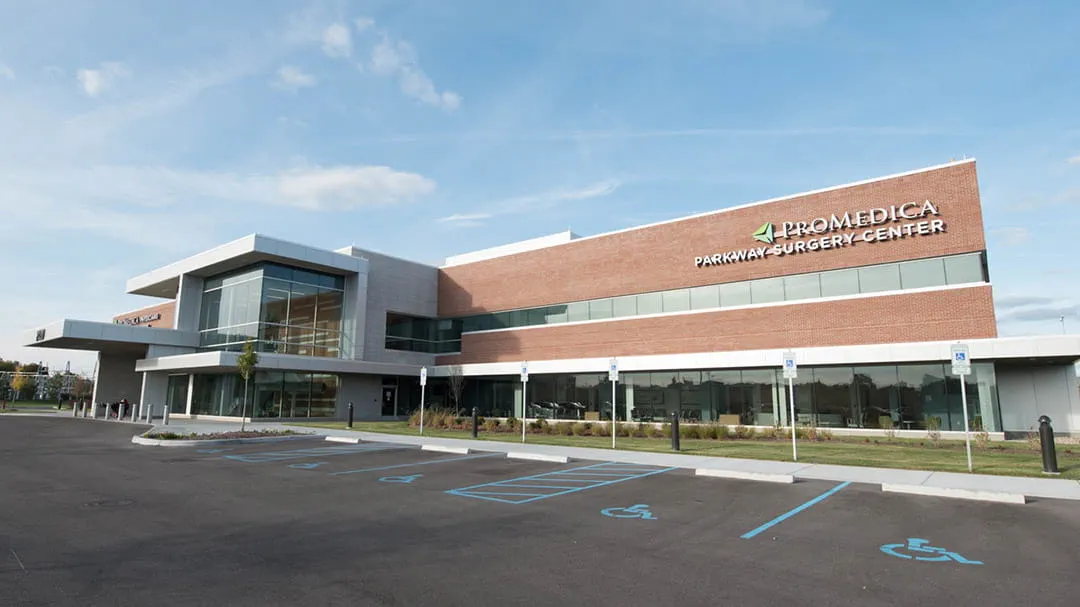
ProMedica Parkway Surgery Center
Welcome to ProMedica Parkway Surgery Center Toldeo, Ohio. Get driving directions, hours of operation, learn about treatment and therapies and more.
ProMedica Fostoria Community Hospital - Medical Office Building
Visit our Fostoria medical office building for expert care in general surgery, gynecology, ophthalmology, orthopaedic surgery, and ENT services.
Related Services & Conditions
Pelvic Health
Your pelvic region includes your bladder, rectum and reproductive organs. When something is wrong, it causes pain and incontinence. We're here to help.
Pelvic Floor Disorders
A weak pelvic floor can cause a variety of disruptive symptoms. Our fellowship-trained specialists have the most experience in the region.
Pelvic Floor Physical Therapy
Our team offers pelvic floor physical therapy as a non-surgical treatment for severe pelvic pain to rebuild the strength, motor control and endurance of pelvic muscles.
Pelvic Congestion Syndrome
We offer compassionate treatment for pelvic congestion syndrome, which causes chronic pelvic pain in women.