Parkinson's disease is a chronic and progressive disease of the nervous system. It affects over 6.1 million people worldwide and there are an estimated 90,000 new cases of Parkinson’s disease in the United States every year.
What causes Parkinson’s disease?
Parkinson’s disease occurs when a protein, called α-synuclein, is abnormally deposited in neurons. This causes a degeneration of neurons that contain dopamine. Symptoms are then brought on by a lack of dopamine.
Symptoms
Parkinson’s disease affects the nervous system. This may cause a combination of movement (motor) symptoms and non-motor symptoms.
The key motor features of Parkinson's disease are:
- Tremor that typically occurs at rest. The movement of the index finger and thumb may have a "pill rolling" appearance.
- Stiffness or rigidity of the limbs and trunk.
- Generalized slowness of movement (bradykinesia).
- Inability to keep the body in a stable or balanced position.
- Gait difficulty.
Non-motor symptoms may include:
- Sleep impairments, such as rapid eye disorder.
- Affective symptoms, such as depression, anxiety or apathy.
- Autonomic changes, such as constipation, drops in blood pressure and excessive sweating.
- Memory changes.
Diagnosis
A diagnosis of Parkinson’s disease should be given by a trained neurologist. They will use their knowledge to perform a clinical evaluation and consideration of symptoms, and may also consider responses to certain medications to give a formal diagnosis.
Treatment Options
Parkinson’s disease can be treated with a combination of medications, therapies and surgical interventions.
Your provider may recommend non-pharmacological interventions including:
- Physical therapy.
- Occupational therapy.
- Speech therapy.
- Increased exercise.
There are several types of medications available depending on the severity of symptoms and comorbidities. Examples of medication classes include dopamine agonists, MAO-B inhibitors, levodopa preparations, amantadine and COMT inhibitors.
Surgical interventions include deep brain stimulation and focused ultrasound.
With deep brain stimulation, a procedure is performed to insert electrodes into a targeted area of the brain. Then, during a second procedure, an impulse generator battery (IPG) is implanted to send electrical stimulation to the areas of the brain that control movement.
Focused ultrasound uses ultrasound beams to cause a lesion in the brain. It may be an option for those who cannot undergo brain surgery for other medical reasons, however the resulting procedure is not adjustable like deep brain stimulation surgery.
If depression or anxiety is present, appropriate treatment should be sought.
Featured Locations

ProMedica Physicians Adult Neurology
Click here to learn about the services we offer. Get driving directions, contact information, operating hours and more.
Northwest Ohio Hemophilia Center
Welcome to Northwest Ohio Hemophilia Center Toledo, Ohio. Get driving directions, hours of operation, learn about treatment and therapies and more.
ProMedica Physicians Neurology - Multi-Specialty Care
Click here to learn about the services we offer. Get driving directions, contact information, operating hours and more.
ProMedica Physicians Neurology - Fremont
Click here to learn about the services we offer. Get driving directions, contact information, operating hours and more.
ProMedica Physicians Neurology - Hasan
Click here to learn about the services we offer. Get driving directions, contact information, operating hours and more.
ProMedica Physicians Neurology - Adrian
Click here to learn about the services we offer. Get driving directions, contact information, operating hours and more.
ProMedica Physicians Neurology - Monroe
Click here to learn about the services we offer. Get driving directions, contact information, operating hours and more.
ProMedica Physicians Neurology - Szymanski
Click here to learn about the services we offer. Get driving directions, contact information, operating hours and more.
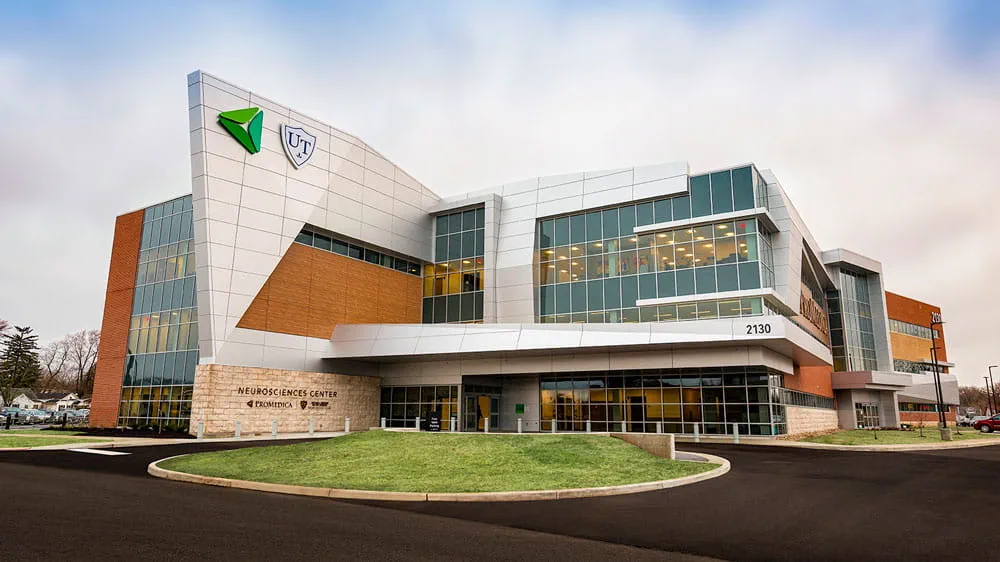
ProMedica Physicians Neurology - Toledo
Click here to learn about the services we offer. Get driving directions, contact information, operating hours and more.
Neurosciences Center
Welcome to Neurosciences Center Toledo, Ohio. Get driving directions, hours of operation, learn about treatment and therapies and more.
Related Services & Conditions
ProMedica Neurosciences Institute
ProMedica's award-winning team of neurology experts includes board-certified neurologists and neurosurgeons. We're here to help you live better when you're facing a neurological condition, with expert care focused on…
Neurologic Rehabilitation
We create personalized care plans to address the physical, emotional and psychological needs of those recovering from injuries of the central nervous system.
Neurosciences
Our award-winning ProMedica Neurosciences Institute team combines academics, research, prevention, screening and treatment to give you access to leading-edge care.
Physical Therapy
Our licensed physical therapists can treat problems that interfere with your ability to move naturally and perform normal daily activities.
Rehabilitation and Therapy
If you're recovering from an injury, illness or surgery, we're here to help you regain the skills and strength you need to get back to your active lifestyle.
Occupational Therapy
Through our Total Rehab Program, our licensed occupational therapists can help you regain the skills and strength you need to get back to doing what you love.