Conditions We Treat
When you're recovering from a health problem, you want to get moving and regain your independence as soon as you can. The rehabilitation and therapy professionals at ProMedica Total Rehab understand. That's why we provide complete physical, occupational, speech and aquatic therapy services for a wide range of health conditions.
Balance Disorders
A balance disorder is a condition that makes you feel unsteady or dizzy. If you're lying down, sitting or being still, it may feel as though you or the area around you is moving. If you're walking, you may feel as though you'll tip over.
A licensed physical therapist at ProMedica can perform a thorough evaluation of your balance disorder by observing your posture and how you move. Your therapist will then determine the strengths and weaknesses of your balance system and work with you to form a treatment plan and exercises for you to do at home.
In some cases, a balance disorder is because of an underlying condition such as a brain injury or infection. Your therapist will always work closely with your doctor to make sure you're getting complete care.
Cancer
After going through cancer treatment, you want to feel like yourself again. Our cancer rehab program helps survivors minimize treatment-related side effects and work toward the best possible quality of life. Some of the issues we help treat include fatigue, weakness, insomnia and memory loss.
Orthopaedic Conditions
Whether you're dealing with a degenerative (weakened) condition like osteoarthritis, you're recovering from surgery, or you have a sports injury, we can create a custom treatment plan to help make the most of your mobility.
Orthopaedic conditions we treat include:
- Ankle sprains.
- Back or neck pain.
- Carpal Tunnel Syndrome.
- Fractures.
- Knee injuries.
- Osteoarthritis.
- Rotator cuff tears.
- Sprains and strains.
- Tendonitis.
Pediatric Conditions
Your child has unique needs and, no matter what, comfort and gentle care are key to healing. That's why we offer therapy services in a comforting, family-centered environment. Our pediatric therapy team consists of occupational, physical and speech therapists who work under the medical direction of a pediatric physiatrist. This team specializes in treating children with congenital or acquired neurological, developmental or orthopaedic conditions.
Pediatric conditions we treat include:
- Cognitive disorders.
- Developmental disorders.
- Movement disorders.
- Speech disorders.
- Swallowing and feeding disorders.
Stroke and Neurological Conditions
Most people who are recovering from a stroke will need physical, occupational or speech therapy services to help retrain their bodies to take on day-to-day activities.
During your first therapy appointment, a complete evaluation will be performed by the therapist to learn about your individual therapy needs. A plan of care will be designed to help you or a loved one achieve the best possible outcome in recovery.
For patients with a stroke and spinal cord injury, our wearable robotic exoskeleton, called EksoNR™, allows them to begin to take steps sooner and initiate gait faster. ProMedica is the first in northern Ohio to add this advanced technology to its comprehensive rehabilitation program.
Women's Health and Incontinence
Have you had minor or occasional leaks of urine? Urinary incontinence affects about 25 million Americans. Our experts at ProMedica Total Rehab will work with you to help you regain control of your bladder.
A physical therapist who specializes in women's health will use some of the following methods to help with incontinence:
- Biofeedback.
- Bladder and muscle re-education.
- Electrical stimulation.
- Relaxation techniques.
- Strengthening the pelvic floor and core muscles.
Services
Cardiac Rehabilitation
ProMedica offers in-person cardiac rehabilitation at all of our hospitals as well as virtual at-home sessions through our partner, Recora. All sessions, both in-person and virtual, are overseen by nurses and cardiac therapists who work as a team to provide you with a personal care plan customized to your needs. Visit our page to see if our virtual program is right for you.
Physical Therapy
Our licensed physical therapists evaluate and treat a range of disorders with a focus on making the most of your skills and abilities. The therapists identify and treat problems that keep you from moving naturally and performing daily activities.
Once your doctor refers you to physical therapy, our therapists will work closely with you and your doctor to design a plan of care that will achieve your best possible outcome in recovery. Our goal is to help you move, reduce pain, restore function and prevent disability.
Occupational Therapy
Occupational therapists use everyday activities as therapy for people who are ill, injured or disabled. They help their patients develop, recover and improve the skills needed for daily living and working.
You may see an occupational therapist if you've had a joint replacement, have a neurological disease or have had a stroke. This type of therapy is based on your health and your goals, but it can include everything from learning how to use utensils again to going back to the workforce.
Speech Therapy
Our licensed speech-language pathologists assess and treat problems with speech, language, communication and swallowing. Speech and language disorders may be something a person is born with or they may be caused by a stroke or neurological condition. Children with speech disorders often have impaired hearing or developmental delays. At ProMedica, we treat children and adults with expert, compassionate care.
Aquatic Therapy
If you're recovering from an injury, surgery or illness and dealing with pain or weakness that makes it hard to exercise, aquatic therapy may be right for you. Aquatic therapy is especially helpful for people with arthritis, joint swelling or other conditions that keep them from doing high-impact, weight-bearing activities.
Lymphedema Therapy
Certain illnesses or therapies, such as cancer treatment, can lead to excessive swelling in the extremities. This condition, caused by a damaged lymphatic system, is called lymphedema. Lymphedema therapy can help reduce swelling, pain and the risk of infection. It can also help you keep up with your normal activities. Lymphedema therapy can take many forms, including massage, specialized skin care and compression wrapping.
The experienced therapists at ProMedica can:
- Educate you about self-care.
- Provide techniques to reduce swelling.
- Help improve daily functions.
Sports Medicine
ProMedica sports medicine therapists will design a personal treatment plan to fit your fitness, mobility and strength goals. Our multidisciplinary team of rehabilitation experts knows how to restore your function as quickly as possible.
Pediatric Rehabilitation
Our pediatric therapy team is made up of occupational, physical and speech therapists who specialize in pediatric care. We help children with congenital or acquired neurological, developmental or orthopedic problems. Therapists go alongside your child to help improve motor, sensory and communication skills. They also assist with adaptive equipment needs.
We believe rehabilitation can be a family-centered journey. A personal care plan is designed by the therapist along with the child's doctor and family. Because family participation is critical, Total Rehab also provides ongoing home therapy programs. Based on your child's needs, these programs are added to the rehab services your child already receives at one of our outpatient rehab centers or at school or daycare.
Frequently Asked Questions
You should always feel confident about your healthcare decisions. That's why we're here to answer all your questions about rehabilitation and therapy. For more information, please call 877-425-5734.
Do I need a doctor's prescription for therapy?
Yes. You should always discuss the option of rehabilitation with your doctor. They can decide if it's safe for you to have therapy for your health condition.
Do I need a referral for therapy?
Some insurance providers require a referral form (this is separate from a physician prescription). Please contact your insurance company for more details.
Will my insurance pay for therapy?
The best way to understand your insurance coverage is to contact your insurance company. There are many different health plans that provide various kinds of coverage.
What do I need to bring with me?
Please bring your insurance card and photo ID, along with paperwork from your doctor or forms that you may have filled out ahead of time. Be sure to wear or bring clothes that are comfortable enough for exercise and allow for access to the area of your body that's being treated.
What can I expect from my therapy session?
You can expect:
- A treatment plan that you and your therapist discuss during the first evaluation.
- Follow-up sessions if needed, that are scheduled to meet your financial and lifestyle requirements.
- A written plan of care and progress reports that are shared with the referring provider.
- A home program designed to meet your specific needs.
How long will my appointment take?
Your first appointment will take about an hour. But you'll need to give yourself extra time to arrive early and complete paperwork before the therapist will see you. Follow-up appointments will take from 30 to 60 minutes.
How many visits will I need?
The number of visits each patient needs varies and is based on many different reasons. Your therapist will be able to give you an estimate after reviewing your physician's orders, completing your initial assessment and talking with you about your treatment plan.
Will therapy hurt?
You may have discomfort because you'll be exercising areas that are recovering from an injury or procedure. But your therapist will work closely with you to check on your discomfort and adapt your program to make sure you have the most improvement with the least discomfort. Therapies such as manual therapy, massage, ice and heat are often used for pain control.
Will I receive exercises to do at home?
Yes. One of the most important aspects of your recovery will be doing the at-home exercises your therapist recommends. Your therapist will write down instructions, tell you what to do, give you pictures or provide all three.
Will the therapist talk to my doctor?
Your therapist will send your plan of care and progress notes to your referring physician to explain your therapy treatments. Your therapist and doctor may also speak directly with each other during your care if there are any questions or concerns.
Are ProMedica Therapists licensed?
All of our physical, occupational and speech therapists are licensed. Physical and occupational therapist assistants are also licensed and may take part in your treatments to help you reach your treatment plan goals.
Featured Locations

The Cullen Center
The Cullen Center offers outpatient pediatric behavioral health assessments, counseling and group support.
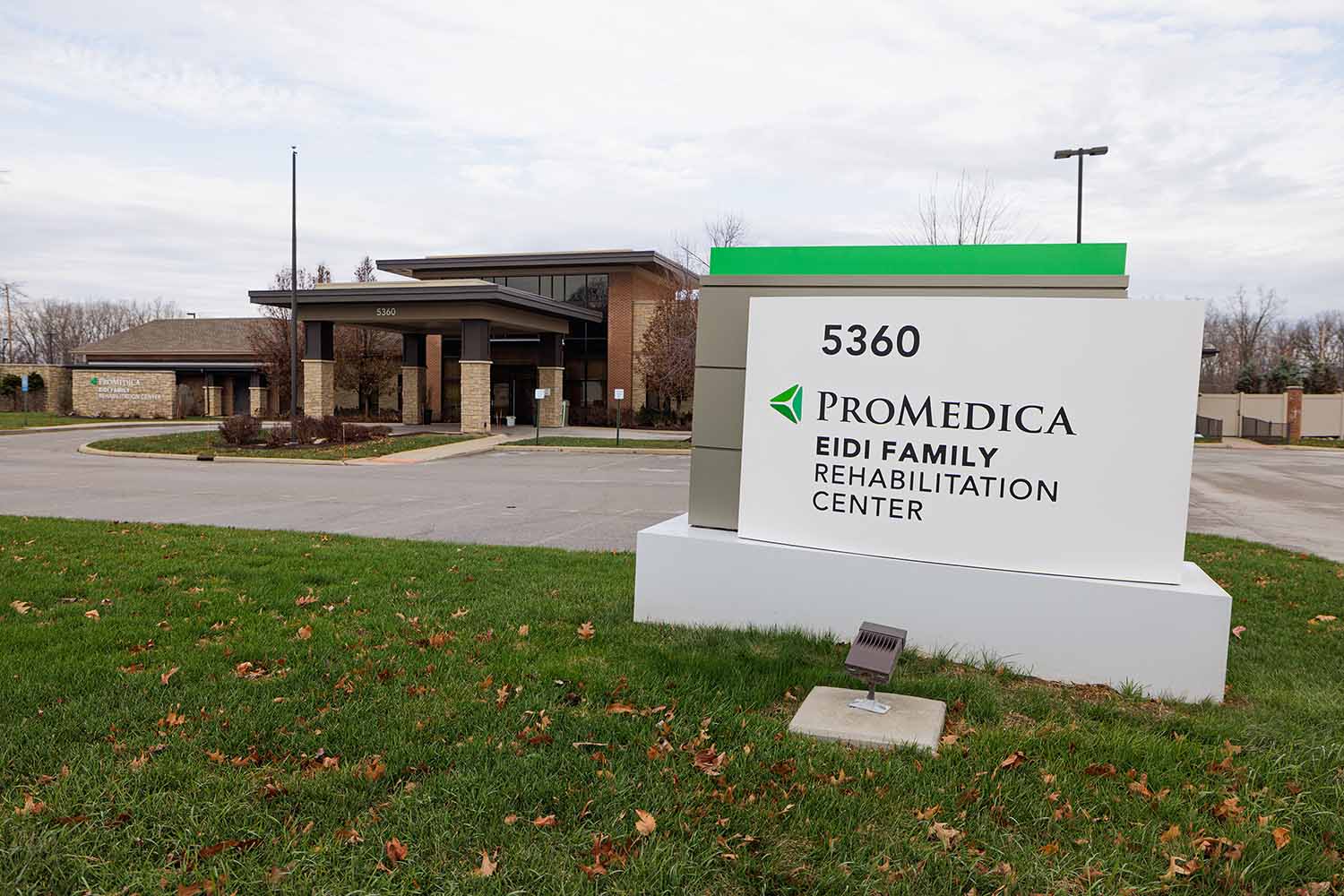
Eidi Family Rehabilitation Center
Achieve your highest potential with our specialized inpatient rehab. Our dedicated staff provides comprehensive care for various conditions in a supportive environment.
Related Services & Conditions
Aquatic Therapy
Aquatic therapy is for people recovering from an injury, surgery or illness. It safely rebuilds your strength so you can get back to doing what you love.
Physical Therapy
Our licensed physical therapists can treat problems that interfere with your ability to move naturally and perform normal daily activities.
Sports Medicine Care
From sports-related injuries and tendonitis to joint pain and arthritis, our sports medicine experts can help keep you in the game.