Here to Help You Prevent, Treat and Heal
Every year, more than 12,000 women in the United States are diagnosed with cervical cancer. The disease impacts a woman's reproductive and overall health.
But the good news is that it can be prevented. It's highly treatable when caught in its earliest stages.
You can have confidence in the women's health and cervical cancer experts at the ProMedica Cancer Institute. They're committed to personal, compassionate care for you.
You'll have access to the most current research and technology in cervical cancer screening and treatment. With convenient locations across northwest Ohio and southeast Michigan, it's our mission to help you achieve your best possible outcome – close to home.
Our Approach
The ProMedica Cancer Institute is accredited by multiple national organizations for cancer care. These credentials recognize our expertise and achievements in meeting the highest standards in our fields. We are accredited by:
- The American College of Radiology
- The Commission on Cancer (CoC)
- The National Cancer Institute's Quality Assurance Review Center
- The Radiation Therapy Oncology Group
As a cancer patient at ProMedica, you'll have access to the most current methods and treatments in cancer care. This includes extreme precision radiation therapy, cancer genetic testing and counseling, clinical trials, pharmacy counseling, rehabilitation services, healing care and the survivorship program.
We are specially trained in understanding the unique physical and emotional effects that cancer treatment can have on a woman's sexuality. Through the ProMedica Cancer Institute Women's Sexual Health program, we work with you to design a plan that meets your individual needs.
With You Through Every Step of Treatment
We know cancer treatment can feel overwhelming. We want you to focus on getting better, not trying to keep tests, treatment and doctors straight. A member of your care team or a personal nurse navigator will guide you through every step of treatment, including:
- Working side-by-side with you to ensure compassionate, supportive and individualized care.
- Scheduling/coordinating appointments, and helping to reduce the amount of time from diagnosis to treatment.
- Providing education and support to you and your family.
- Facilitating/coordinating care provided by an interdisciplinary team of physicians, including medical, surgical and radiation oncology consults.
- Working on behalf of you and your family to remove possible obstacles to care, including insurance issues, medication assistance or lack of transportation.
- Communicating with your physician and helping to communicate the physician's plan of care.
Understanding the Risks and Symptoms of Cervical Cancer
When cervical cancer is found early, the chances for recovery are high. That’s why early detection is so important.
Determine Your Risk Factors
When it comes to detecting cancer, knowledge is power. You’ll want to understand your family health history, your own health conditions and how your lifestyle can contribute to cervical cancer. This will help you spot any warning signs and guide the conversations you need to have with your doctor.
If any of the following risk factors apply to you, speak with your doctor about which screenings are recommended and how often you should have them.
- Age.
- Excess weight.
- History of herpes.
- Immune system deficiency.
- Personal or family history of cervical cancer.
- Smoking.
- Use of oral contraceptives.
- Your mother took the medicine DES (diethylstilbestrol) while pregnant with you.
Recognize the Symptoms
If you notice any symptoms of cervical cancer, time is of the essence. Talk with your doctor right away, especially if you’re at higher risk.
Cervical cancer symptoms can include:
- Abnormal vaginal bleeding (after intercourse, after menopause or between periods).
- Pain during sex.
- Pelvic pain.
- Periods that are longer or heavier than usual.
- Unusual discharge (may contain some blood).
Understand the Relationship Between HPV and Cervical Cancer
Almost 93% of all cervical cancer cases are caused by the human papillomavirus (HPV), a very common virus among sexually active people.
HPV alone doesn’t cause cervical cancer, but it may when it’s combined with other risk factors.
Most people who are exposed to HPV won’t develop symptoms — and their immune systems will likely clear the virus from their bodies in about two years. Still, certain strains of HPV cause cells of the cervix to change and become cancerous in some women.
HPV can be prevented by getting the HPV vaccine and by using a condom during sex.
Know How Smoking Impacts the Development of Cervical Cancer
Medical studies suggest that tobacco and its by-products can cause damage to the DNA of cervical cells and cause them to become cancerous. That’s why it’s important to quit smoking as a way to help prevent cervical cancer, especially if you already have a higher risk.
Diagnosis and Treating Cervical Cancer
Get an Accurate Cervical Cancer Diagnosis
At ProMedica, we recommend regular pelvic exams, Pap tests and HPV tests to help prevent cervical cancer. General screening recommendations from the American College of Obstetricians and Gynecologists are as follows:
- Under 21 years: no screening.
- 21 – 29 years old: Pap test every 3 years.
- 30 – 65 years old: combined Pap test and HPV test every 5 years OR Pap test every 3 years OR HPV test every 5 years.
Screening recommendations depend on your age and health history. Your health care provider can help you choose the best exam schedule for you. The doctor can also recommend any added testing or screening for you, based on your unique history and needs. Talk with your doctor about scheduling a screening.
Your recommended screenings may include:
- Pelvic exams: Typically, a pelvic exam is the first step in diagnosing gynecologic cancers. During a pelvic exam, your doctor will be able to note changes in the size or shape of your cervix.
- Pap tests: Cell changes on the cervix called precancers can become cervical cancer if they aren’t treated. A Pap test, also sometimes called a Pap smear, can help your doctor test for these cell changes.
- Colposcopy: If the results of your Pap test are abnormal, your doctor will recommend a procedure called a colposcopy. This lets your doctor examine the surface of your cervix to find any abnormal areas.
- Biopsy: If an abnormal area is seen during a colposcopy, a biopsy will be done to learn if it’s cancer.
- HPV tests: These tests let you know whether or not you have HPV, which can produce cancerous cells. It’s a good first step if you’re having symptoms.
Find Expert Cervical Cancer Treatment
It can feel overwhelming to be diagnosed with cervical cancer and have to navigate your treatment choices. Especially since cervical cancer treatment differs based on your cancer type and stage.
But you can count on the ProMedica Cancer Institute to help you understand your condition and guide your treatment decisions. We’re accredited and recognized as the largest cancer program in the region. That means our highly trained and credentialed medical, radiation and surgical oncologists will offer you access to:
- Clinical trials.
- Genetic testing and counseling.
- Healing care.
- Nurse navigator services.
- Medicine management counseling.
- Precision radiation therapy.
- Rehabilitation services.
- Survivorship program.
Once your doctors determine the stage and location of your cervical cancer, they will recommend a treatment plan. The plan may include one therapy or a combination of several therapies.
Chemotherapy
Chemotherapy for cervical cancer treatment, which is administered through an IV, may be given before or after surgery. It may also be provided in cases where the cancer has spread to other areas of the body.
Immunotherapy (or Biotherapy)
Immunotherapy is also referred to as biotherapy. It uses your body’s own immune system to fight cervical cancer.
Radiation Therapy
Radiation therapy uses high energy X-rays to shrink and kill cancer cells. It’s usually given after surgery or chemotherapy to reduce the risk of the cancer coming back.
Surgery
Surgery is used to remove the cancer, and possibly the lymph nodes and healthy tissue around the cancer. Types of surgical treatments for cervical cancer include Loop Electrosurgical Excision Procedure (LEEP), conization and hysterectomies.
Featured Locations

ProMedica Memorial Hospital Orthopaedics
Welcome to ProMedica Memorial Hospital Orthopaedics. Get driving directions, hours of operation, learn about treatment and therapies and more.


Adrian
Chemotherapy and Infusion Services
Discover what ProMedica Hickman Infusion Center has to offer.

Oregon
ProMedica Bay Park Hospital Cancer Care
Discover what ProMedica Bay Park Hospital Cancer Center has to offer.

Fremont
Cancer Care
Welcome to ProMedica Dorothy L. Kern Cancer Center Fremont, Ohio. Get driving directions, hours of operation, learn about treatment and therapies and more.

Sylvania
ProMedica Hickman Cancer Center
Discover what ProMedica Flower Hospital Hickman Cancer Center has to offer.

Fostoria
Cancer Care
Discover what ProMedica Fostoria Community Hospital Canter Care has to offer.

Toledo
Alan W. and Deborah J. Brass Children's Cancer Center
Discover what ProMedica Alan W. and Deborah J. Brass Children's Cancer Center has to offer.

Defiance
ProMedica Defiance Regional Hospital Cancer Center
Discover what ProMedica Defiance Regional Hospital Cancer Center has to offer.
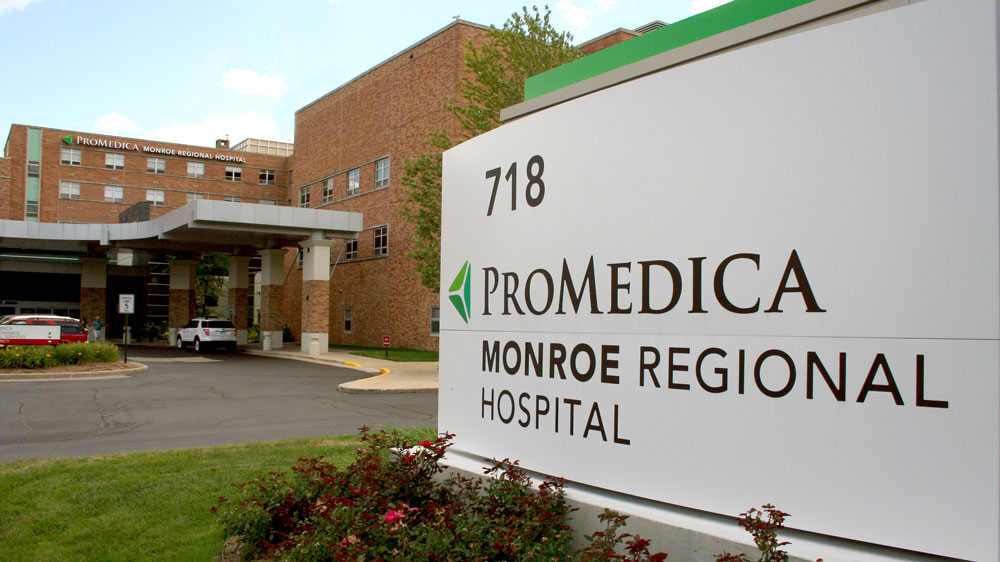
Monroe
Cancer and Infusion Services
Discover what ProMedica Monroe Regional Hospital Cancer and Infusion Services has to offer.

ProMedica Monroe Cancer Center
Welcome to ProMedica Monroe Cancer Center Monroe, Michigan. Get driving directions, hours of operation, learn about treatment and therapies and more.
Sylvania
ProMedica Cancer Institute High Risk Clinic
ProMedica Cancer Institute’s High Risk Clinic is dedicated to supporting people with a higher-than-average risk of developing certain cancers.
Related News & Stories

ProMedica Stories
Cancer Screenings - Get them While You Feel Great!
Cancer screenings are down due to the pandemic across our system, across the state and across the country.

Wellness
Pap Tests and HPV Tests: The Importance of Cervical Cancer Screenings
Pap tests and HPV tests catch abnormal cells early, making cervical cancer largely preventable.

Health Conditions
Spotting the Signs of Head and Neck Cancer
The earlier cancer is caught, the easier it is to treat. Learn more about the signs and when to seek medical attention.

Health Conditions
Cervical Cancer Stigma Threatens Screening and Diagnosis
Eradicating cervical cancer may be possible, but stigma makes it harder to diagnose early.

Care & Treatments
The Difference Between the HPV and Pap Test
Discover the differences between the tests and who might benefit from getting each type of test.

Care & Treatments
5 Reasons To See Your Doctor, Even When You’re Healthy
Prioritizing health care in young adulthood can be one of the best things you can do for your future health and longevity.

Decisions & Planning
Scalp Cooling May Reduce Hair Loss from Chemotherapy
Scalp cooling, or scalp hypothermia, can help reduce hair loss in select patients by decreasing the amount of chemotherapy that gets to the scalp.

Wellness
The Importance of Prevention, Care and Well-Being Among Women
Women’s health is particularly important because women have a higher risk of developing certain health conditions that can be easily treated.
Related Services & Conditions
Women's Health
From breast care and gynecologic services to midlife care and pelvic health, we're passionate about women's health and are here for every stage of your life.
Gynecologic Surgery
From endometriosis to incontinence, our women's health experts offer surgical options that meet your needs at every stage of life.
Gynecology
Our women's health experts are available for screenings, routine exams and other specialized gynecologic care.
Radiation Therapy
Radiation therapy is high-energy, therapeutic X-rays that can help prevent cancer cells from growing and multiplying.
Chemotherapy
Chemotherapy uses medications to treat cancer, keep it from spreading, slow growth or relieve symptoms. We're ready to help with a variety of chemotherapy options, including HIPEC, to treat your cancer.